



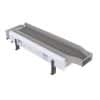


Jog Conveyor for Gentle Grain, Seed and Food Product Transfer
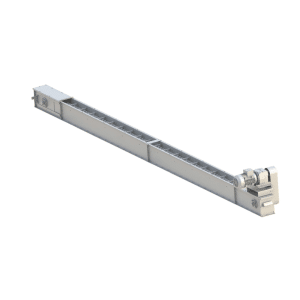
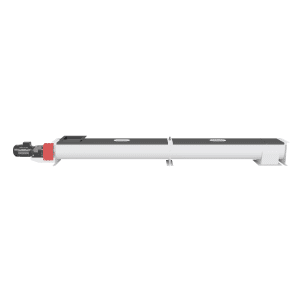
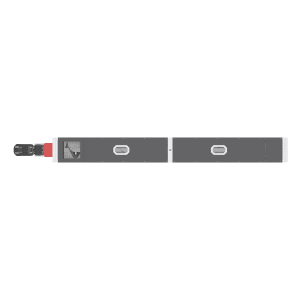
The ADDAMS Jog Conveyor is a vibratory conveying system designed to move free-flowing bulk products along a controlled trough. It is commonly used for horizontal or slightly inclined transfer where a clean, open conveying surface, accurate distribution and reduced mechanical contact are important. The machine can handle grain, seed, pulses, nuts, granules and selected food or industrial products, subject to confirmation of the material and duty.
Unlike a belt, chain or screw conveyor, a jog conveyor has no continuously moving conveying element inside the product path. The trough moves in a controlled reciprocating pattern that advances the material in small steps. This operating principle can provide smooth transfer and easy visual inspection, while the simple product-contact area can support cleaning and product-change requirements.
Typical Applications
- Transferring cleaned grain or seed between processing machines
- Feeding optical sorters, weighing systems and packaging equipment
- Moving pulses, nuts, kernels, pellets and other free-flowing products
- Distributing product across several discharge points
- Collecting product beneath screens, sorters or storage outlets
- Handling applications where accessible cleaning is a priority
How a Jog Conveyor Works
An electric drive creates a controlled oscillating motion in the conveying trough. Depending on the selected design, the motion may be generated by an eccentric mechanism, vibration motor or another engineered drive arrangement. The movement repeatedly accelerates the product in the conveying direction and allows it to settle, producing progressive travel along the trough.
Stroke, frequency, trough angle and product loading influence the conveying rate. The supporting springs or flexible elements guide the motion and isolate part of the dynamic force from the support structure. Correct tuning and installation are important because the machine, product and support arrangement operate as a combined dynamic system.
Main Components and Design Functions
| Component | Function | Selection Considerations |
|---|---|---|
| Conveying trough | Provides the product path | Width, depth, length, hygiene, wear and product behavior |
| Vibratory drive | Generates the controlled conveying motion | Capacity, loading, stroke, frequency and operating duty |
| Springs or flexible supports | Guide movement and support dynamic operation | Machine mass, tuning, fatigue life and isolation requirements |
| Support frame | Maintains alignment and transfers loads to the structure | Rigidity, anchoring, access and surrounding equipment |
| Inlet section | Receives product from upstream equipment | Feed control, drop height, impact and distribution across the trough |
| Discharge section | Directs product to the next process | Chute geometry, flow continuity and blockage prevention |
| Covers and dust connections | Help contain product and airborne dust | Inspection access, aspiration, seals and cleaning frequency |
| Controls and monitoring | Coordinate operation and protect equipment | Interlocks, overloads, sensors, speed control and emergency stops |
Capacity and Machine Selection
Jog conveyor capacity is determined by more than trough width. Product bed depth, conveying velocity, bulk density and usable cross-section all contribute to throughput. The drive must also be selected for the combined mass of the trough and material, the operating cycle and the required acceleration.
Product Protection and Gentle Handling
A jog conveyor can be a suitable option for fragile or high-value products because there is no screw flight or dragging chain moving through the material. Nevertheless, product motion still creates contact with the trough and with other particles. The result depends on acceleration, bed depth, surface material, inlet drop and transfer geometry.
For seed, coated product, nuts or other damage-sensitive materials, representative trials are recommended when a defined breakage or coating-loss limit is required. Inlet and outlet transitions should minimize free fall and sharp changes in direction. The complete transfer route, rather than the conveyor alone, should be evaluated for product protection.
Distribution, Metering and Multiple Outlets
A vibratory trough can spread material across its width and present a controlled product layer to downstream equipment. This makes jog conveyors useful ahead of optical sorters, weighing systems or inspection operations that benefit from even feeding. Actual metering accuracy depends on the feeder arrangement, controls and material consistency.
Several discharge openings may be incorporated for distribution duties. Manual or actuated gates can direct flow to selected destinations. Gate positions, chute capacity and the control sequence must be coordinated so product cannot collect above a closed outlet or enter an unintended process route.
Trough Construction and Product Contact Surfaces
The trough can be manufactured in painted carbon steel, stainless steel or another suitable material according to the product and environment. Food-contact or treated-seed duties may require specific surface finishes, compatible seals and cleaning procedures. Wear liners may be considered for abrasive materials, while low-friction or cushioning materials may help selected fragile products.
Open, Covered and Dust-Controlled Designs
An open trough provides excellent visibility and access, but it is not appropriate where product escape, contamination or dust emissions must be controlled. Removable or hinged covers can protect the material and support a cleaner working area. Covers should allow safe inspection and should not interfere with the designed trough motion.
Dust connections may be included at transfer points when required. Aspiration must be balanced so it captures airborne dust without removing valuable product or disturbing flow. For combustible dust environments, the plant owner and project team must complete the applicable risk assessment and define grounding, electrical classification and protection measures.
Incline, Decline and Layout Considerations
Jog conveyors are normally applied on horizontal routes, although a limited incline or decline may be possible. Conveying performance changes with slope because gravity affects material travel and bed stability. The practical angle must therefore be confirmed for the product, trough geometry and drive.
Installation and Structural Support
The support frame and surrounding steelwork must be sufficiently rigid for the dynamic equipment. Flexible or under-designed supports can change the motion, transmit vibration and reduce predictable performance. Anchor positions, support elevations and allowable structural loads should be coordinated before installation.
Controls and Safety
The conveyor may be integrated with upstream and downstream equipment through a coordinated control sequence. Interlocks should stop incoming product if the conveyor or receiving machine is unavailable. Depending on the application, monitoring may include overload protection, motion detection, blocked-chute sensing and status feedback to the plant control system.
Moving drive parts and accessible hazards require appropriate guards. Covers and guards should only be removed under an approved isolation and lockout procedure. Emergency stops, access platforms and local safety devices are defined according to the final installation and risk assessment.
Maintenance and Cleaning
Routine inspection should include the trough, drive, bearings, springs or flexible elements, fasteners, guards and support structure. Cracks, looseness, unusual noise or a change in conveying behavior can indicate a developing mechanical or structural issue. Fasteners should be checked using the approved maintenance instructions because vibration can expose inadequate locking or support.
The trough should be cleaned at intervals appropriate to the product and hygiene duty. Residual material may remain at seams, discharge gates or transitions even when the main conveying surface appears clear. Plants changing varieties, allergens or treated products should use a documented cleaning and inspection procedure.
Frequently Asked Questions
What products can a jog conveyor handle?
It can handle many free-flowing grains, seeds, pulses, nuts, pellets and granules. Final suitability depends on flowability, moisture, fragility, temperature and required throughput.
Is a jog conveyor suitable for fragile seed?
It can provide gentle transfer when the motion, bed depth and transitions are selected correctly. Product trials are recommended when a specific damage limit must be guaranteed.
Can a jog conveyor feed an optical sorter?
Yes. A properly designed trough can distribute product into a controlled layer, but the required width, feed rate and outlet geometry must match the sorter inlet.
Can the machine have several discharge points?
Yes. Multiple outlets and gates can be incorporated for distribution, provided the flow path, controls and downstream capacity prevent blockage or incorrect routing.
Can it convey material uphill?
A limited incline may be possible, although capacity and material behavior change with angle. The practical slope is confirmed for the specific product and drive arrangement.
How is the conveyor cleaned?
Cleaning depends on the product and hygiene standard. Accessible trough surfaces, removable covers and suitable transitions support cleaning, while the plant should define the required method and verification procedure.
Request a Project-Specific Proposal
Send ADDAMS your product details, required capacity, conveying length, slope, inlet and outlet positions, operating hours and hygiene requirements. Our team can configure a Jog Conveyor and connected equipment for your processing or packaging line.
Related Equipment and Process Options
Assess controlled transfer and machine feeding alongside alternative conveyors and the receiving process.
- Screw Conveyor
- Chain Conveyor
- Grain & Seed Belt Conveyor Systems
- Fine Seed Cleaners
- Optimum 220 Series Screen Grader
Share your product sample, target capacity, quality requirements and existing line layout. Request your custom quote from ADDAMS to evaluate equipment selection and process connections.
Reviews
There are no reviews yet.