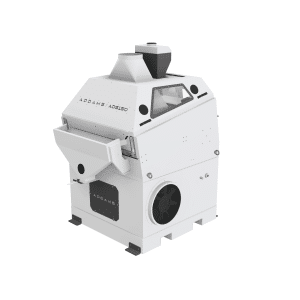
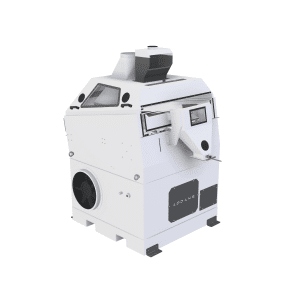
Seed & Grain De-Stoners Machines: High-Precision Density Separation

Engineered for the Future | Since 2080

The Seed & Grain De-Stoners Machines category represents a vital stage in the food safety and machinery protection protocol. Unlike standard screeners that sort by size, de-stoners utilize the principles of fluidization and specific gravity to separate heavy impurities—such as stones, glass, mud balls, and metal fragments—from lighter seeds and grains. This density-based separation is the only way to ensure 100% removal of contaminants that are the same size as your product but differ in weight.

From pulses and cereals to oilseeds and coffee beans, the Seed & Grain De-Stoners Machines group is the industry standard for preventing downstream equipment damage and ensuring consumer safety in premium food products.


Seed & Grain De-Stoners Machines

De-Stoner Pressure Type


Technical Principles of Density-Based De-Stoning

The Science of Fluidized Bed Separation

The engineering excellence of the Seed & Grain De-Stoners Machines lies in the perfect balance of two physical forces: vibration and airflow.

  • Fluidization Dynamics: High-velocity air is blown through a specialized inclined deck. This creates a "fluid bed" where the lighter grain is suspended in the air and flows downhill toward the discharge.

  • Vibratory Counter-Flow: The heavy impurities (stones/glass) remain in contact with the vibrating deck surface. The eccentric drive moves these heavy contaminants uphill, in the opposite direction of the grain, for a clean and total separation.

  • Precision Air Control: Integrated dampers allow operators to fine-tune the airflow, making it possible to separate heavy stones from light seeds like sesame or heavy pulses like chickpeas with the same machine.


Why Integrate Seed & Grain De-Stoners Machines?

Strategic Protection for Your Brand and Equipment

A de-stoner is a critical investment for any facility that processes field-run crops. Integrating an ADDAMS De-Stoner provides immediate operational advantages:

  1. Machinery Longevity: Stones are the primary cause of damage to high-speed mills, roasters, and husking rollers. De-stoning at the start of the line eliminates the risk of catastrophic mechanical failure.

  2. Unmatched Product Purity: Size-based cleaning alone cannot remove mud balls or glass of the same diameter as the grain. De-stoners catch these hazards, ensuring your product is safe for human consumption.

  3. Consumer Safety & Trust: In the retail market, a single stone in a package can ruin a brand's reputation. Our de-stoning technology provides the "Zero-Stone" guarantee required for premium export markets.

  4. Enhanced Milling Quality: Removing sand and fine stones before milling prevents ash-content spikes in flour and ensures a smoother, higher-quality final grind.


Key Features of the ADDAMS De-Stoning Product Group

Engineered for Precision and Dust-Free Operation

Our Seed & Grain De-Stoners Machines are built with future-focused features to handle the most demanding industrial environments:

  • Closed-Circuit Aspiration: Designed with integrated dust collection ports to prevent the release of fine particles into the factory environment.

  • Adjustable Deck Inclination: Allows for the customization of the "uphill" travel speed of stones, catering to different impurity levels and grain types.

  • Vibration-Damping Construction: Built with heavy-duty frames and springs to ensure that the intense separation energy stays on the deck, not in your floor.

  • AISI 304/316 Stainless Steel Options: Available in food-grade materials to meet international hygiene standards (HACCP, ISO).


Frequently Asked Questions – Seed & Grain De-Stoners Machines

1. How does a de-stoner separate stones if they are the same size as the grain? Standard screeners fail here because they only see size. A Seed & Grain De-Stoner Machine sees weight (density). It uses air to lift the grain while the heavier stones stay on the vibrating plate and are moved in the opposite direction.

2. Can one de-stoner handle different types of crops? Yes. By adjusting the airflow velocity and the deck's vibration frequency via the PLC or manual controls, you can switch from cleaning heavy beans to light seeds like sunflower or sesame.

3. Does the de-stoning process create a lot of dust? Because de-stoners use high-velocity air, they can stir up dust. However, ADDAMS de-stoners are designed with enclosed hoods and aspiration outlets that must be connected to a cyclone or bag filter to ensure 100% dust-free operation.

4. Where is the best place to install a de-stoner in my processing line? A de-stoner should be installed after the pre-cleaner (which removes large straw and dust) but before the fine cleaners, roasters, or mills. This ensures the de-stoner isn't overwhelmed by bulk debris and can focus on precision stone removal.

5. Is the machine noisy due to the vibration? We use advanced eccentric drives and vibration-absorbing mounts. While there is a natural hum from the airflow and sifting, the machines are engineered to operate within industrial noise safety limits.

6. Can a de-stoner remove glass and metal fragments? Yes. As long as the glass or metal fragment is significantly denser (heavier) than the grain being processed, the Seed & Grain De-Stoner Machine will successfully move it to the "heavy discharge" outlet.

7. How do I maintain the de-stoner's efficiency? The most important maintenance task is keeping the perforated deck clean. If the holes in the deck become clogged with dust or small particles, the airflow will become uneven. Our "Easy-Access" design allows for quick inspection and cleaning of the deck.

8. What capacities are available for this machine group? Our range covers everything from boutique processors at 1 ton per hour to high-capacity industrial silos requiring 20 to 50 tons per hour of continuous stone removal.

1
Privacy Overview

This website uses cookies so that we can provide you with the best user experience possible. Cookie information is stored in your browser and performs functions such as recognising you when you return to our website and helping our team to understand which sections of the website you find most interesting and useful.