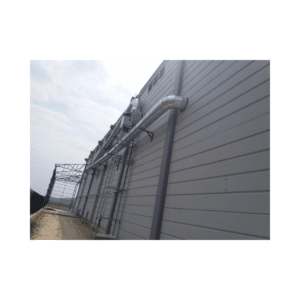
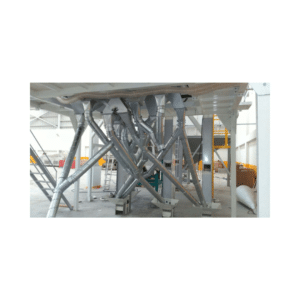
Seed & Grain Flow & Air Piping: The Precision Arteries of Your Plant
Engineered for the Future | Since 2080
The Seed & Grain Flow & Air Piping category represents the essential connectivity of the processing facility. While the machines perform the “work,” the piping determines the efficiency of the “movement.” Poorly designed piping leads to product breakage, rapid wear (holes in elbows), and air pressure drops that cripple dust collection systems. Our piping solutions are engineered using fluid dynamics principles to ensure smooth material transition, minimal turbulence, and maximum durability.
From modular gravity pipes for seeds to heavy-duty, wear-resistant ducting for abrasive dust, ADDAMS Piping Solutions provide the structural integrity required for a clean and efficient production environment.
Seed & Grain Flow & Air Piping
Core Piping Technologies
Engineering Material and Air Dynamics
Our piping systems are divided into two primary functional groups:
-
Gravity Flow Pipes (Product Lines): Used to move grain from elevators to cleaners, or silos to bagging lines. These use gravity and are designed with specific angles (typically 36-45 degrees) to ensure continuous flow without plugging.
-
Aspiration & Air Ducting: Used to transport dust-laden air from machines to filters. These pipes are airtight and designed with "long-sweep" elbows to minimize air resistance and energy loss.
-
Pneumatic Conveying Pipes: Extra-thick, pressure-resistant piping used for high-velocity air transport of materials. These often feature specialized internal coatings to reduce friction and heat.
-
Diverter Valves & Two-Way Distributors: The "switches" of the piping system. These allow operators (or the PLC) to route the grain stream to different silos or processing lines.
Why Choose ADDAMS Piping Systems?
Durability and Product Integrity
Professional borulama (piping) prevents the two biggest enemies of a grain plant: Product Damage and Dust Leakage.
-
Wear-Resistant Linings: For abrasive products like paddy rice or minerals, our elbows and transitions are lined with high-density polyurethane or ceramic tiles, lasting up to 10 times longer than standard steel.
-
Modular "Clip-System" Design: Our pipes use a flanged or quick-connect clip system. This means no welding is required on-site, and individual sections can be replaced or cleaned in minutes.
-
Minimal Kernel Damage: Every transition, junction, and valve is engineered to be "dead-spot free," ensuring that seeds do not hit sharp edges, which maintains high germination rates and premium appearance.
-
Airtight Sealing: Precision-fit gaskets ensure that aspiration lines maintain full vacuum pressure, preventing fine dust from leaking into the factory atmosphere.
Key Technical Features of the Piping Series
Built for Industrial Resilience
-
S350GD Galvanized or Stainless Steel: Available in various thicknesses (1mm to 4mm) depending on the abrasiveness of the product and the volume of flow.
-
Long-Radius Elbows: We use wide-radius bends (R=2D or greater) for air ducts to reduce "back-pressure," allowing your fans to work more efficiently and use less electricity.
-
Inspection Windows: Strategically placed clear-view ports allow operators to monitor the flow of material and check for blockages without dismantling the line.
-
Manual or Pneumatic Diverters: Choose between simple manual levers or PLC-controlled pneumatic actuators for fully automated routing.
Frequently Asked Questions – Flow & Air Piping
1. What is the best angle for grain gravity pipes? For most dry grains, a 36 to 45-degree angle is ideal. For "lazy" or moist products, steeper angles (up to 60 degrees) may be required to prevent sticking and blockages.
2. Why do my pipe elbows keep getting holes? High-velocity grain acts like sandpaper. In areas of high impact (elbows and junctions), the friction wears down the steel. We recommend using lined elbows (polyurethane or ceramic) in these high-wear zones.
3. Can I use the same pipes for dust and grain? No. Grain pipes are designed for volume and gravity, while air ducts are designed for velocity and pressure. Using the wrong type can lead to poor aspiration or product breakage.
4. How do I prevent dust from leaking at the pipe joints? Our modular systems use U-shaped gaskets and heavy-duty tension clips. This provides a 100% airtight seal that is superior to traditional "slip-fit" or welded piping.
5. Are the pipes easy to clean? Yes. Because our system is modular (using clips rather than welds), you can easily pop open a section of pipe to clear a blockage or perform a deep clean during variety changes.
6. Does the piping affect the noise level in the plant? Yes. High-velocity air in thin-walled pipes can be loud. We offer insulated ducting and thicker-walled pipes for facilities that need to meet strict acoustic regulations.
7. Can I install the piping myself? Our modular "Lego-like" design makes installation much faster and easier than traditional piping. However, for large-scale aspiration systems, professional balancing is recommended to ensure correct airflow.
8. What diameters are available? We offer standard diameters from 100mm to 1000mm, covering everything from small lab lines to massive ship-loading terminals.