

Seed & Grain Coolers: Precision Thermal Stabilization
Engineered for the Future | Since 2080
The Seed & Grain Coolers category represents a vital stage in the post-harvest and food processing chain. Grain or seeds that have undergone drying, roasting, or cooking must be brought back to ambient temperature before storage or packaging. Storing hot grain leads to condensation, mold growth, and rapid degradation. Our technology uses controlled, high-volume air currents to remove internal heat gently and uniformly, ensuring that the biological and nutritional integrity of the product is locked in for the long term.
From vertical counter-flow coolers for industrial silos to fluidized bed systems for delicate flakes, ADDAMS Cooling Solutions provide the thermal stability required to prevent spoilage and maintain premium quality.
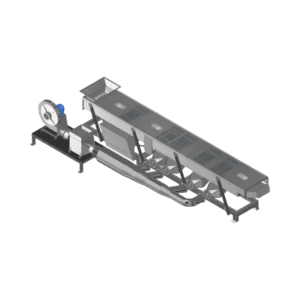
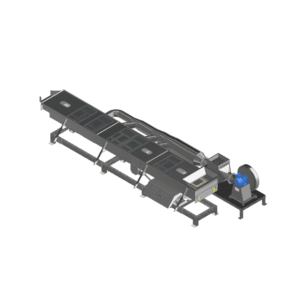
Seed & Grain Cooler
Core Cooling Technologies
Engineering Efficient Heat Exchange
Our cooling category utilizes different mechanical approaches to ensure rapid and uniform temperature reduction:
-
Counter-Flow Coolers: The most efficient method for bulk grains and pellets. Cold air enters from the bottom while hot material moves down from the top. As the air moves up, it gradually warms, ensuring the most even heat exchange without shocking the product.
-
Fluidized Bed Coolers: High-velocity air is blown from beneath the product, causing it to "float." This is ideal for small seeds or fragile flakes that require 360-degree air contact for rapid cooling.
-
Vertical Cooling Columns: Gravity-fed systems that use the natural fall of the grain through a series of internal baffles to maximize exposure to ambient air.
-
Cross-Flow Cooling Belts: Ideal for roasted nuts or cooked seeds. The product is spread thin on a perforated belt while air is pulled through the layer, providing a gentle cooling process that prevents breakage.
Why Integrate ADDAMS Cooling Systems?
Ensuring Storage Stability and Product Quality
A dedicated cooling stage is the only way to prevent "thermal shock" and moisture migration in stored products.
-
Prevention of Condensation: Cooling the grain to within 5 degrees of ambient temperature prevents moisture from condensing on the inside of silos or bags, stopping mold before it starts.
-
Preservation of "Vigor" and Germination: Rapid but gentle cooling stops the internal metabolic processes triggered by heat, preserving the seed's energy for planting.
-
Optimized Packaging Performance: Products cooled to ambient temperature are easier to weigh and bag, preventing "sweating" inside plastic packaging which can ruin retail appearance.
-
Energy Recycling: Our systems can be integrated with Seed & Grain Dryers to capture the warm air exhausted from the cooling stage and reuse it as pre-heated air for the drying stage, cutting fuel costs significantly.
Key Technical Features of the Cooler Series
Built for Constant Airflow and Hygiene
-
Integrated Centrifugal Fans: High-pressure fans are engineered to push air through deep beds of grain, ensuring the center of the mass is cooled as effectively as the exterior.
-
PLC-Controlled Discharge: Automatic sensors monitor the exit temperature and adjust the discharge speed to ensure no product leaves the machine until it has reached the target temperature.
-
Dust-Tight Air Outlets: All exhaust air is funneled through central ports that can be connected to cyclones or bag filters, keeping your facility clean and dust-free.
-
Stainless Steel Interior: To prevent corrosion from the warm, moist air released during cooling, all contact parts are made from high-grade AISI 304 or 316 stainless steel.
Frequently Asked Questions – Seed & Grain Coolers
1. Why can't I just let the grain cool naturally in the silo? Natural cooling is too slow. The heat trapped in the center of a large silo creates a "chimney effect," moving moisture to the top where it condenses, leading to crusting, rot, and insect outbreaks. Active Cooling is mandatory for safe storage.
2. Does cooling remove more moisture from the grain? Yes. This is known as "Evaporative Cooling." As the heat leaves the grain, a small amount of moisture (typically 0.5% to 1%) is also removed, which further stabilizes the product.
3. Can I use these machines for roasted nuts? Absolutely. In fact, for roasted products, the cooler is essential to "stop the roast" instantly. If not cooled quickly, the internal heat will continue to cook the nut, leading to a burnt taste.
4. How long does it take to cool a batch of grain? In a continuous counter-flow cooler, the residence time is typically 10 to 20 minutes, depending on the initial temperature and the density of the product.
5. Is ambient air enough, or do I need refrigerated air? In most climates, ambient (outside) air is sufficient. However, for specialty seeds in tropical regions, we can integrate an Air Chiller to provide refrigerated air for even lower storage temperatures.
6. Does the cooling process create a lot of dust? The high-volume air can pull away loose husks and dust. Every ADDAMS cooler is designed to be connected to a Cyclone System to capture this material and maintain facility hygiene.
7. Can the machine handle different seed sizes? Yes. The discharge gates and internal baffles are adjustable, allowing you to switch between large beans and small seeds like sesame without leakage.
8. What capacities are available? Our cooling systems range from 2 tons per hour for specialty roasters to 100+ tons per hour for industrial grain terminals and feed mills.