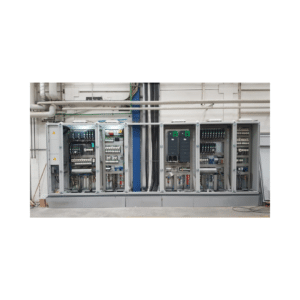
Seed & Grain Automation & Control Systems: The Intelligence Behind the Flow

Engineered for the Future | Since 2080

The Seed & Grain Automation & Control Systems category represents the transition from a collection of individual machines to a synchronized, intelligent ecosystem. In a modern facility, manual control is no longer sufficient to maintain the precision required for high-grade seed production. Our automation systems provide real-time monitoring, remote management, and data-driven decision-making, ensuring that every fan, motor, conveyor, and scale operates at peak efficiency.

From simple PLC control panels to complex SCADA systems with AI-driven predictive maintenance, ADDAMS Automation Solutions provide the digital infrastructure for the “Smart Factory” of tomorrow.


Seed & Grain Automation & Control System

Plant Automation


Core Automation Technologies

Engineering Synchronized Operations

Our automation category is built on three layers of technology that work together to manage the facility:

  • PLC (Programmable Logic Controllers): The industrial computers that directly control machine hardware. They manage start/stop sequences, interlocks (preventing spills if a conveyor stops), and safety protocols.

  • SCADA (Supervisory Control and Data Acquisition): The visual interface (HMI) where operators see the entire plant on a screen. It provides real-time status of silo levels, motor temperatures, and flow rates.

  • Smart Sensors & IoT: High-precision instruments that measure moisture, temperature, vibration, and level. These sensors feed data back to the central system to trigger automatic adjustments.

  • Motor Control Centers (MCC): Centralized panels housing VFDs (Variable Frequency Drives) and soft-starters, which protect motors from electrical surges and allow for precise speed control.


Why Choose ADDAMS Automation Systems?

Efficiency, Safety, and Traceability

Automation is not just about convenience; it is the most effective way to protect your profit margins.

  1. Elimination of Human Error: Automated interlocks ensure that if a machine in the middle of the line fails, all upstream machines stop instantly, preventing massive product spills and blockages.

  2. Energy Optimization: Our systems use intelligent algorithms to manage peak power loads and adjust fan speeds (via VFDs) based on actual air requirements, reducing electricity costs by up to 25%.

  3. Total Traceability: Every batch is logged digitally. You can track which silo it came from, which machines processed it, and its final weight, meeting the strictest food safety and certification standards.

  4. Remote Monitoring & Support: Access your plant's status from a smartphone or tablet. Our engineers can also provide remote diagnostics to solve software issues without needing a site visit.


Key Technical Features of the Control Series

Built for Resilience and Connectivity

  • Custom HMI (Human-Machine Interface): Intuitive touchscreens with multi-language support and simplified "One-Touch" start/stop sequences for the entire plant.

  • Predictive Maintenance Alerts: Sensors monitor motor vibrations and temperatures, alerting you before a bearing fails, allowing for scheduled maintenance instead of emergency downtime.

  • Cloud Data Integration: Sync your production data with your ERP or accounting software for automated inventory management and yield reporting.

  • Fail-Safe Redundancy: Critical systems can be equipped with secondary controllers to ensure the plant remains operational even in the event of a hardware failure.


Frequently Asked Questions – Seed & Grain Automation

1. Can I automate an existing "manual" plant? Yes. We specialize in retrofitting older facilities with modern PLC panels and sensors. This is often the most cost-effective way to increase capacity and reduce waste.

2. Is the system difficult for staff to learn? No. Our ADDAMS Vision interface is designed with a "Process Flow" layout. If an operator understands the machines, they can understand the software. We also provide full on-site training.

3. What happens during a power failure? The system features an "Orderly Shutdown" sequence. When power is restored, the PLC remembers the state of the line and guides the operator through a safe restart process to prevent blockages.

4. How does automation improve product quality? By maintaining consistent flow rates and temperatures (in dryers/cookers/roasters) without manual fluctuations, the final product achieves a level of uniformity that is impossible to reach by hand.

5. Can I see my silo levels on my phone? Yes. With our IoT-enabled level sensors, you can check your inventory levels in real-time from anywhere in the world via a secure cloud portal.

6. Does automation help with "Dust Explosion" safety? Significantly. Automation monitors dust filter pressures and bearing temperatures, automatically shutting down the system if a dangerous heat or pressure threshold is reached.

7. Is the software updated periodically? Yes. Just like a smartphone, our control software receives periodic updates to improve security, add new features, and optimize performance based on global user data.

8. What is the ROI (Return on Investment) for a full automation system? Most clients see a full return on investment within 12 to 24 months through reduced energy costs, lower labor requirements, and the elimination of product waste due to spills or over-processing.

1
Privacy Overview

This website uses cookies so that we can provide you with the best user experience possible. Cookie information is stored in your browser and performs functions such as recognising you when you return to our website and helping our team to understand which sections of the website you find most interesting and useful.