Aspiration Chambers: Precision Vertical Air-Wash Systems
Engineered for the Future | Since 2080
The Aspiration Chambers category represents the most versatile and essential component of any grain or seed cleaning line. These vertical air channels are designed to “wash” the product with a controlled upward current of air as it falls by gravity. By exploiting the differences in terminal velocity between the target seed and lighter impurities, Aspiration Chambers effectively remove dust, chaff, husks, and shriveled kernels that cannot be separated by size alone.
Whether used as a standalone unit at a grain intake point or integrated into a multi-stage cleaning plant, the ADDAMS Aspiration Chamber is the industry standard for achieving a dust-free, high-purity final product.
Aspiration Chambers
Technical Foundations of Aspiration Technology
The Mechanics of Aerodynamic Separation
The engineering success of the Aspiration Chambers category lies in the precise management of air pressure and material distribution within the column.
-
Gravity-Fed Dispersion: As material enters the chamber, it is spread evenly across the width of the channel. This ensures that every individual grain is exposed to the air stream, preventing "clumping" that hides dust.
-
Counter-Flow Air Velocity: A central fan (or connected aspiration system) pulls air upward through the falling curtain of grain. The air velocity is tuned to be high enough to lift light debris but low enough to allow the "good" heavy grain to continue its descent.
-
Expansion Zone Dynamics: At the top of the chamber, the air enters an expansion zone where the velocity drops. This allows heavier dust particles to settle into a collection hopper while the finest dust is carried away to a cyclone or bag filter.
Why Integrate Aspiration Chambers?
Enhancing Food Safety and Facility Hygiene
Aspiration is not just about purity; it is about protecting the health of your operators and the longevity of your machinery.
-
Immediate Dust Control: Captures 99% of airborne dust at the source, preventing it from settling on factory floors or being inhaled by staff.
-
Improved Visual Quality: Removes the "dull" look from seeds by stripping away the micro-fibers and dust that cling to the seed coat, resulting in a brighter, more marketable product.
-
Pest and Mold Prevention: By removing light, organic debris and "green" material, aspiration reduces the primary food source for insects and prevents moisture-traps that lead to mold in storage silos.
-
Optimized Color Sorting: Removing dust before a color sorter is essential. Clean, dust-free grain allows optical sensors to "see" defects much more clearly, reducing reject errors.
Key Features of the ADDAMS Aspiration Series
Built for Transparency and Precise Calibration
Our Aspiration Chambers are designed for high-performance industrial environments with a focus on operator control:
-
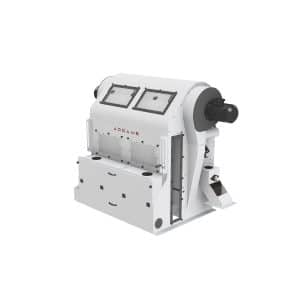
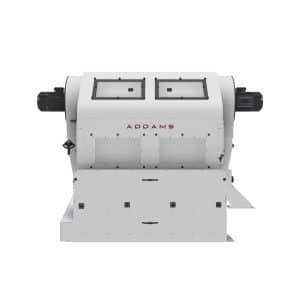
Transparent Observation Panels: Large, impact-resistant windows allow operators to visually inspect the separation process and adjust airflow in real-time.
-
Telescopic Air Adjustments: Features adjustable internal baffles that can be moved to change the "thickness" of the air stream, catering to everything from light grass seeds to heavy chickpeas.
-
AISI 304/316 Stainless Steel Construction: Available in food-grade materials to comply with global hygiene standards and ensure a long service life in corrosive environments.
-
Universal Flange Design: Engineered for easy integration into existing elevator discharges, conveyor outlets, or cleaner inlets.
Frequently Asked Questions – Aspiration Chambers
1. Is an Aspiration Chamber the same as a De-Stoner? No. An Aspiration Chamber removes light impurities (dust, husks, empty seeds) using air. A De-Stoner removes heavy impurities (stones, glass) using a combination of air and vibration.
2. Can I use this machine for very light seeds like sesame or poppy? Absolutely. Because our chambers feature variable airflow controls and adjustable internal plates, you can reduce the air velocity to a level that is safe for ultra-light seeds while still removing the dust.
3. Does the chamber come with its own fan? We offer both configurations. You can purchase the Aspiration Chamber as a standalone unit to connect to your facility's central aspiration system, or we can provide it with an integrated high-efficiency centrifugal fan.
4. How do I know if the air velocity is too high? If you see "good" product being pulled into the dust discharge or cyclone, your air velocity is too high. You can easily adjust this using the manual damper or the VFD on the fan motor.
5. Where is the best place to install an air channel? Aspiration is most effective at transition points: where an elevator discharges into a cleaner, or where a cleaner discharges into a grader. The goal is to "clean" the grain every time it moves from one machine to another.
6. Does it require much maintenance? The Aspiration Chamber has no moving parts (except for a fan, if included). Maintenance is limited to regular cleaning of the observation windows and checking that the air ducts are not blocked by large debris.
7. Can it handle wet or damp grain? Aspiration is significantly more effective on dry materials. If the grain is damp, dust and husks will stick to the seeds, making it much harder for the air current to pull them away.
8. What capacities are available? Our range covers diverse industrial scales, from 5 tons per hour for specialty seed plants to 150+ tons per hour for high-capacity grain intake terminals.