Seed & Grain Grader Screeners: Dimensional Uniformity and Quality Sizing

Engineered for the Future | Since 2080

The Seed & Grain Grader Screeners category is the final authority on product uniformity and market value. While cleaners focus on removing impurities, graders focus on the dimensional perfection of the “good” product. By sorting seeds and grains into precise size fractions based on width, thickness, and length, this product group ensures that your final output meets the strict calibration requirements of retail packaging, industrial milling, and precision agriculture.

From the high-accuracy Optimum 120 Series to specialized cylindrical shape sorters, the Seed & Grain Grader Screeners category provides the technical precision required to elevate raw commodities into premium, uniform seed lots.


Grain & Seed Cleaning Machines

Optimum 220 Series Screen Grader

Seed & Grain Grader Screeners

Vibrotary Screen Graders


Precision Sizing Technologies in Grain Grading

Dimensional Calibration for Competitive Markets

Our grading product group features diverse mechanical approaches to achieve 100% uniformity in bulk material flow:

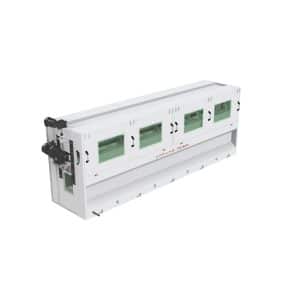
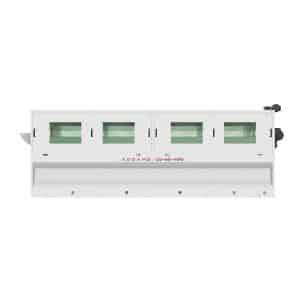
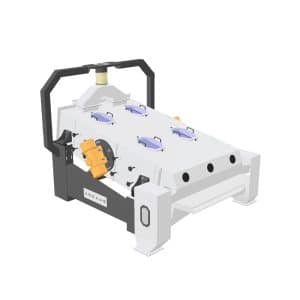
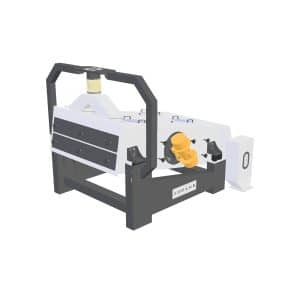
  • Seed Graders Optimum 120 Series: High-performance vibratory graders that utilize multi-layer screening to sort seeds into distinct size categories with exceptional repeatability.

  • Cylindrical Screening Graders: Specialized shape-based sorters that use rotating cylinders to separate broken, round, or elongated seeds that flat screens might miss.

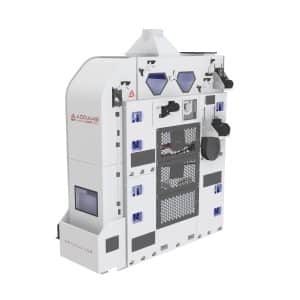
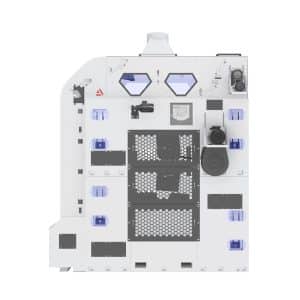
  • Vibrotary Screen Seed Graders: Advanced units that combine vibration with rotary dynamics to achieve high-speed grading for pulses, oilseeds, and cereals without compromising accuracy.


Why Invest in Seed & Grain Grader Screeners?

Driving Profitability through Uniformity and Calibration

Precise grading is no longer an option but a necessity for modern processing plants. Integrating an ADDAMS Grader provides several strategic advantages:

  1. Increased Market Value: Uniformly sized grains and pulses command a significant premium in the export market, as they represent higher quality and easier industrial processing.

  2. Optimized Planting Performance: For seed producers, grading ensures that every seed is of a consistent size, allowing for the accurate calibration of precision planters and uniform crop emergence.

  3. Consistent Processing Results: In roasting or milling, uniform grain size ensures even heat distribution and consistent flour extraction rates, preventing over-processing of smaller kernels.

  4. Removal of "Hollow" and Immature Grains: Grading by width and thickness effectively removes shriveled or underdeveloped grains that reduce the overall protein content and weight of the batch.


Technical Highlights of the Grading Category

Engineered for Micro-Precision and Industrial Durability

The equipment within the Seed & Grain Grader Screeners category is built to the highest food-grade standards (AISI 304/316) and features future-focused engineering:

  • Variable Speed Control: Integrated VFD (Variable Frequency Drive) motors allow operators to adjust the vibration or rotation intensity to match the flow characteristics of different crops.

  • Modular Screen Decks: Easily interchangeable perforated sheets allow for the creation of multiple product grades (e.g., Grade A, Grade B, and Undersized) in a single pass.

  • Zero-Clog Ball Cleaning: High-elasticity rubber balls maintain the openness of the screen apertures, ensuring 24/7 grading precision without manual intervention.

  • Sanitary Enclosed Design: Fully dust-tight construction protects the product from environmental contamination and keeps the facility clean.


Frequently Asked Questions – Seed & Grain Grader Screeners

1. What is the difference between a Seed Cleaner and a Seed Grader? A cleaner is designed to remove "bad" material (impurities, dust, stones) from the "good" product. A Seed & Grain Grader Screener is designed to sort the "good" product into different size categories (Extra Large, Large, Medium) to meet specific market demands or industrial requirements.

2. Why is the Optimum 120 Series recommended for high-precision grading? The Optimum 120 Series is engineered with a specific stroke length and vibration frequency that maximizes the time the seed spends in contact with the screen. This ensures that even the slightest dimensional variations are detected and sorted correctly.

3. Can I separate broken grains from whole grains using these machines? Yes. While flat-bed graders are excellent for width sorting, our Cylindrical Screening Graders are the most effective for removing broken (half) seeds, as they sort specifically by the length and shape of the grain.

4. How many different sizes can I grade at one time? Depending on the model and the number of screen decks installed, our graders can typically separate a single input stream into 2 to 5 distinct size fractions in one continuous pass.

5. Are these machines suitable for oily seeds like sesame or sunflower? Absolutely. The Vibrotary Screen Seed Graders are specifically designed to handle the slightly cohesive nature of oilseeds, ensuring they do not clump and are graded with the same precision as dry cereals.

6. How do I choose the correct screen hole size for my product? Screen selection depends on your target market's specifications. Our engineering team provides custom screen-size charts for hundreds of crop varieties to help you achieve the exact calibration you need.

7. Is maintenance difficult on these high-precision graders? No. We focus on "Maintenance-Free" engineering. The drive systems are robust and lubricated for life, and the "Quick-Change" screen system allows for tool-free maintenance and cleaning between different seed lots.

8. Do these graders support high-capacity industrial lines? Yes, our grading category includes solutions ranging from 1 ton per hour for specialty seed producers up to 20+ tons per hour for large-scale pulses and grain exporters.

1
Privacy Overview

This website uses cookies so that we can provide you with the best user experience possible. Cookie information is stored in your browser and performs functions such as recognising you when you return to our website and helping our team to understand which sections of the website you find most interesting and useful.