Seed & Grain Storage Silos: Strategic Post-Harvest Preservation

Engineered for the Future | Since 2080

The Seed & Grain Storage Silos category represents the final and most durable stage of the agricultural value chain. Proper storage is the difference between a successful harvest and a total loss. Our silos are engineered to provide an airtight, temperature-controlled environment that prevents mold, insect infestation, and grain respiration losses. By utilizing advanced galvanization and structural design, we provide storage solutions that can withstand extreme weather conditions while keeping the grain in “field-fresh” condition for months or even years.

From flat-bottom silos for long-term strategic reserves to hopper-bottom silos for rapid processing flow, ADDAMS Storage Solutions are the global benchmark for safety and reliability.


Seed & Grain Storage Silos

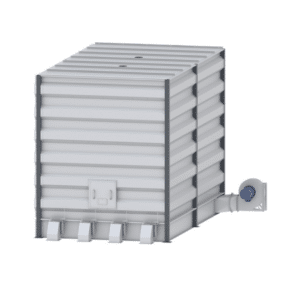
Conveyor Bottom Silo

Seed & Grain Storage Silos

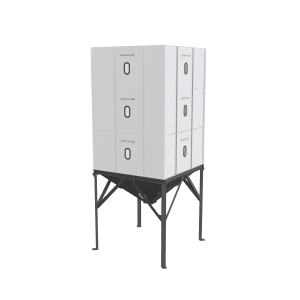
Square Silos


Core Storage Technologies

Engineering Structural Integrity and Aeration

Our silo category is divided into configurations based on the storage duration and the method of discharge:

  • Flat-Bottom Silos: Designed for long-term bulk storage of high volumes (up to 20,000+ tons per silo). They feature "sweep augers" for final discharge and are the most cost-effective solution for large-scale reserves.

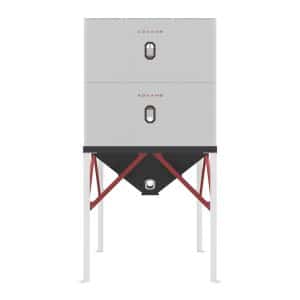
  • Hopper-Bottom (Coned) Silos: Designed for short-to-medium term storage and rapid turnover. The conical base allows the grain to discharge completely by gravity, making them ideal for feeding cleaning, milling, or bagging lines.

  • Feed Silos: Smaller, specialized hopper silos used in livestock and poultry farms. They are designed for frequent discharge and often feature specific coatings to prevent feed "bridging."

  • Buffer Silos: Compact units placed between processing stages (e.g., between drying and cleaning) to ensure a steady flow of material and prevent production bottlenecks.


Why Choose ADDAMS Storage Systems?

Climate Control and Grain Longevity

A silo is more than just a steel tank; it is a biological climate-control chamber.

  1. Advanced Aeration Systems: Every silo is equipped with high-capacity centrifugal fans and perforated floor systems that push air through the grain mass to remove heat and moisture.

  2. Digital Temperature Monitoring: Integrated sensor cables hang inside the silo, providing real-time data on the temperature at different depths. This allows for early detection of "hot spots" caused by insects or mold.

  3. High-Grade Galvanization: We use S350GD grade steel with Z600 (600g/m²) zinc coating, ensuring the silos can withstand salt-air environments and resist corrosion for over 30 years.

  4. Seismic and Wind Resistance: Our structural engineers calculate the specific wind and seismic loads for your geographic location, ensuring the silo remains stable in the harshest environments.


Key Technical Features of the Silo Series

Built for Protection and Automation

  • Sealed Roof Designs: Engineered to be water-tight and bird-proof, featuring specialized roof vents that allow air to escape while preventing rain and pests from entering.

  • Silo Side Ladders & Platforms: Built to international safety standards, providing secure access for inspection and maintenance.

  • Level Sensors: High and low-level indicators send alerts to your control room when the silo is full or empty, preventing overfilling.

  • Modular Bolt-Together Design: Allows for rapid on-site assembly and the ability to expand your storage capacity as your business grows.


Frequently Asked Questions – Seed & Grain Storage Silos

1. How long can I store grain in a silo? If the grain is dried to the correct moisture level (e.g., 13% for wheat) and the temperature is managed via Aeration, grain can be stored safely for 1 to 2 years with minimal quality loss.

2. What is the difference between a Flat-Bottom and a Hopper-Bottom silo? Flat-Bottom silos hold more volume for less cost but require a "sweep auger" to empty. Hopper-Bottom silos empty 100% by gravity but are more expensive because of the heavy-duty support legs and cone structure.

3. Do silos protect against insects? Silos are far more effective than warehouses, but they require management. Cold air from the aeration system makes the grain too cold for insects to breed. For severe cases, silos can be sealed for professional fumigation.

4. How do I prevent "Bridging" (grain getting stuck)? Bridging happens with moist or high-fiber materials. We use steeper hopper angles and can install "Vibratory Bin Dischargers" or "Air Cannons" to keep the material flowing.

5. How much space do I need for a 1,000-ton silo? This depends on the grain density. For wheat, 1,000 tons requires roughly 1,300 cubic meters of volume. A typical silo for this would be approximately 11 meters in diameter and 18 meters high.

6. Can I store different grains in the same silo at different times? Yes. However, you must thoroughly clean the silo between different varieties to prevent cross-contamination, especially when switching between seeds or allergens (like soy vs. corn).

7. Does the silo need a foundation? Yes. Silos exert massive pressure on the ground. A professional concrete foundation, designed by a structural engineer, is mandatory to prevent tilting or collapse.

8. What capacities are available? Our range starts at 10-ton buffer silos and goes up to 25,000-ton industrial flat-bottom silos.

1
Privacy Overview

This website uses cookies so that we can provide you with the best user experience possible. Cookie information is stored in your browser and performs functions such as recognising you when you return to our website and helping our team to understand which sections of the website you find most interesting and useful.