

Seed & Grain Treaters & Coaters: Advanced Protection & Performance
Engineered for the Future | Since 2080
The Seed & Grain Treaters & Coaters category represents the final and most sophisticated stage of seed conditioning. While cleaning removes physical impurities, treatment and coating provide biological armor. These machines precisely apply fungicides, insecticides, nutrients, and polymers to the seed surface. This process—ranging from simple film coating to complex pelleting—ensures that every seed is equipped to resist soil-borne pathogens and pests, leading to uniform germination and maximized crop yields.
At ADDAMS, our Seed & Grain Treaters & Coaters are designed with micro-dosing technology to ensure 100% coverage with zero chemical waste, meeting the strictest international environmental and safety standards.
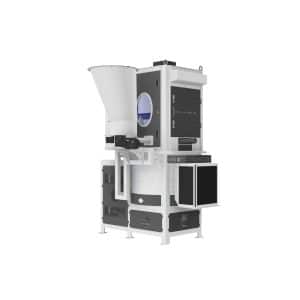
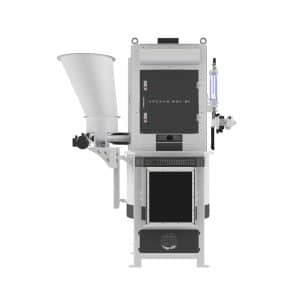
Seed & Grain Treaters & Coaters
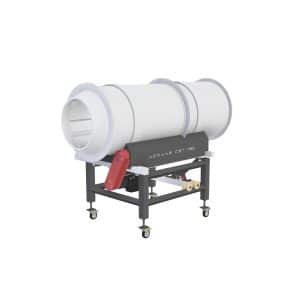
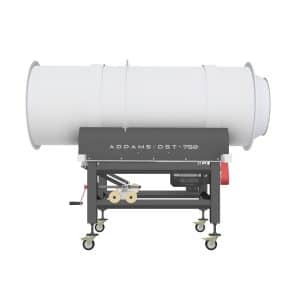
Seed & Grain Treaters & Coaters
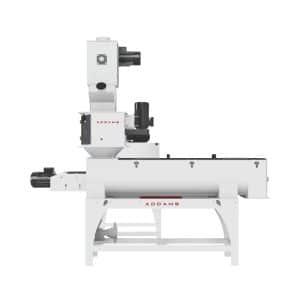
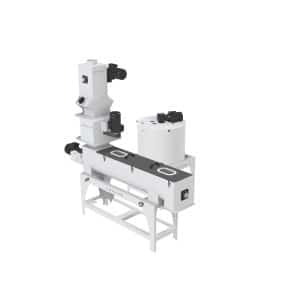
Seed & Grain Treaters & Coaters
Technical Methods of Seed Enhancement
From Protective Dressing to Precision Pelleting
The engineering of our Seed & Grain Treaters & Coaters supports several distinct application methods depending on the crop's needs:
-
Film Coating: The application of a thin, liquid polymer layer containing active ingredients (fungicides/insecticides). It provides protection without significantly changing the seed's original size or shape.
-
Seed Pelleting: A process that surrounds small or irregular seeds (like lettuce or sugar beet) with a "shell" of filler materials. This increases size and weight, transforming them into uniform spheres for precision mechanical planting.
-
Encrusting: Similar to pelleting but thinner, encrusting increases seed weight and improves "flowability" through planters while retaining much of the seed's original shape.
-
Inoculation: The precise application of beneficial bacteria (like Rhizobium for legumes) to stimulate root growth and nitrogen fixation.
Why Integrate ADDAMS Seed Treaters & Coaters?
Securing the Harvest at the Genetic Level
Integrating a professional treatment stage provides a decisive advantage for seed producers and commercial farmers:
-
Precision Dosing Accuracy: Our PLC-controlled volumetric systems ensure that every seed receives the exact micro-gram of chemical required. This prevents "phytotoxicity" (damage to the seed from over-application) and saves on expensive chemicals.
-
Zero "Dust-Off" Technology: Advanced binders and polymers lock the treatment onto the seed surface. This eliminates harmful chemical dust during handling and sowing, protecting both workers and the environment (especially honeybees).
-
Uniform Field Emergence: Coated seeds are more resilient to early-season stressors like cold soil or drought, ensuring a consistent plant stand across the entire field.
-
Enhanced "Plantability": Coated and encrusted seeds flow more smoothly through vacuum and mechanical planters, reducing "skips" and "doubles" that waste space and resources.
Key Features of the ADDAMS Treatment Series
Engineered for Consistency and Operator Safety
The equipment within the Seed & Grain Treaters & Coaters category is built for high-accuracy industrial use:
-
Centrifugal Atomization: High-speed spinning discs turn liquid treatments into a fine mist, ensuring every square millimeter of the seed surface is covered before it enters the mixing stage.
-
Secondary Paddle Mixing: A gentle, secondary mixing auger ensures the treatment is evenly distributed between seeds without damaging the delicate seed coat.
-
Multi-Stage Dosing Systems: Our machines can simultaneously apply up to four different liquids or powders (e.g., a fungicide, a nutrient, a biological agent, and a colorant) in a single pass.
-
Closed-Loop Safety Design: Fully enclosed chambers with integrated aspiration prevent any chemical vapors from escaping into the facility, ensuring total operator safety.
Frequently Asked Questions – Seed & Grain Treaters & Coaters
1. What is the difference between a "Batch" and a "Continuous" treater? A Batch Treater processes a fixed weight of seed at a time, offering extreme precision for high-value vegetable seeds. A Continuous Treater (like the ADDAMS STL series) processes a steady flow of grain, making it the preferred choice for high-volume crops like wheat, corn, and soybeans.
2. Does the treatment make the seeds wet? The application uses very small amounts of liquid, which are quickly absorbed or dried by the friction of the mixing process. For high-volume coating or pelleting, we recommend an integrated Fluidized Bed Dryer after the treater.
3. Can I apply powders and liquids at the same time? Yes. Our advanced models feature separate dosing units for liquids and powders, allowing them to be applied synchronously to create complex multi-layer coatings.
4. How do I calibrate the machine for different chemical recipes? Our PLC Touch Screen interface allows you to save "recipes." Once you input the seed flow rate and the desired chemical dosage per 100kg, the machine automatically adjusts the pump speeds to maintain that ratio.
5. Why are treated seeds usually colored (red, blue, or green)? Colorants are added as a safety warning to signify that the seeds are treated with chemicals and are not for human or animal consumption. It also helps farmers verify the coverage uniformity.
6. Does the coating process damage fragile seeds like beans or peas? No. We use specialized rubber-lined mixing tubes and low-impact paddles specifically designed to handle "easy-to-split" seeds with extreme care.
7. Can I use biological agents (microbes) in these machines? Yes. Our systems are designed for the gentle application of biologicals and inoculants, ensuring the living organisms remain viable on the seed surface until planting.
8. What capacities are available for this category? Our range covers everything from lab-scale units (500 kg/h) for research to massive industrial treaters capable of processing 25 to 40 tons per hour.