



Continuous Seed Treater for Proportional Dosing and Uniform Flow
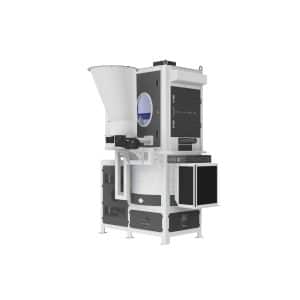
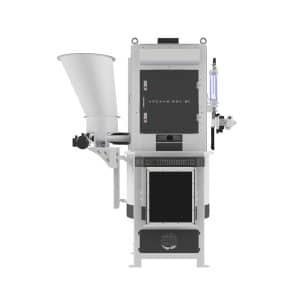
The ADDAMS continuous seed treater applies approved liquid treatment products while seed moves through the machine at a controlled rate. Unlike a batch system that treats a fixed quantity per cycle, a continuous treater synchronizes seed flow with liquid dosing for uninterrupted production.
The system suits commercial seed plants, grain processors, cooperatives and contract treatment operations requiring steady throughput and integration with cleaning, drying and packaging equipment. Configuration depends on crop, capacity, treatment rate, formulation properties and automation requirements.
Applications and Suitable Crops
The machine can be considered for wheat, maize, barley, rice, soybean, sunflower, pulses, forage seed and other suitable agricultural products. Depending on the approved recipe and local regulations, applications may include crop-protection products, polymers, colorants, micronutrients, biological products or inoculants.
Seed and liquid properties must be evaluated before selection. Small or light seed responds differently from dense cereals, while rough or irregular surfaces may require different mixing action. Liquid viscosity, suspended solids, settling, foaming and chemical compatibility influence pump, tank, hose and nozzle selection.
How Continuous Seed Treatment Works
- Controlled seed feed: Clean seed enters through a regulated feeder or flow-measuring system.
- Proportional dose calculation: The controller relates the approved application rate to measured seed flow.
- Liquid delivery: A calibrated pump sends treatment liquid to the distribution device at the required rate.
- Initial application: Nozzles, a rotary disc or another selected device distributes liquid into the moving seed stream.
- Mixing and coating: Seed travels through a chamber where controlled mechanical action spreads treatment over the surfaces.
- Continuous discharge: Treated seed exits toward conditioning, drying, holding, bagging or bulk loading.
Stable treatment requires both flows to remain coordinated. If seed flow changes while liquid flow remains constant, over- or under-application can result. The dosing system should respond to feed variation and stop liquid delivery when seed flow is interrupted.
Main Components and Selection Considerations
| Component | Function and project considerations |
|---|---|
| Seed feeder | Creates a controlled, measurable flow and limits sudden surges. |
| Flow measurement | Provides the seed-rate signal for proportional dosing. The method is selected for the required range and accuracy. |
| Liquid preparation tank | Holds the approved formulation and may include agitation when required by supplier instructions. |
| Dosing pump | Delivers liquid at a controlled rate. Materials and operating range must suit the formulation. |
| Distribution system | Introduces liquid through selected nozzles, a rotary atomizer or another suitable device. |
| Mixing chamber | Spreads treatment across the moving seed stream while limiting unnecessary impact and abrasion. |
| PLC and operator interface | Controls recipes, proportional dosing, interlocks, alarms and available production records. |
Contact parts can be supplied in suitable stainless steel or another compatible material. Seals, hoses, pumps and surface finishes are confirmed after reviewing the treatment products and cleaning procedure.
Seed Flow Measurement and Proportional Dosing
Continuous treatment quality begins with reliable measurement of seed flow. Depending on the arrangement, this may use a weigh belt, loss-in-weight feeder, impact measurement or another calibrated method. The controller converts the measured seed rate into a liquid-flow target based on the approved recipe.
Measurement range matters. A system operating far below its intended range may not provide the same control quality as it does near the design point. Plants processing several crops should provide minimum and maximum capacities, bulk densities and expected flow variation so metering equipment can be selected correctly.
Liquid Preparation and Calibration
Treatment formulations may arrive ready to use or require preparation according to supplier instructions. Tanks can include level detection, recirculation or agitation where permitted. Operators must follow the approved mixing order and avoid combining incompatible products.
Pumps and flow devices require calibration with the actual liquid because viscosity and suspended particles affect delivery. Water-only calibration may not represent production conditions. The system should be checked at several operating rates, and actual liquid consumption compared with treated seed mass.
Distribution and Mixing Quality
The application device creates the first contact between liquid and seed. Spray pattern, droplet size, position and rate influence how treatment enters the mixing chamber. The following mixer must spread the liquid without causing excessive seed damage or coating loss.
Mixing speed, chamber fill, residence time and seed characteristics work together. Excessive mechanical action may increase abrasion, while insufficient mixing can leave visible differences. Representative trials help define settings and acceptance criteria for coverage, dust-off, clumping, flowability and germination.
Capacity and Line Balancing
Nominal tonnes per hour should be connected to a defined crop and bulk density. Volumetric feeders, conveyors and chambers handle different mass quantities when density changes. Moisture, seed size and flowability can also influence practical capacity.
Upstream cleaning equipment should provide a stable supply, often through a buffer hopper and controlled feeder. Downstream conveyors, dryers, bins and bagging systems must accept treated flow without backing up. Interlocks can prevent untreated seed passing through during liquid-system faults or treated seed accumulating at the discharge.
Automation, Recipes and Production Records
A PLC-based system can store approved parameters such as target application rate, pump calibration, mixer speed and alarm limits. Access levels may restrict unauthorized changes. Available records can include crop or lot identification, seed mass, calculated liquid use, operator, time and alarm events.
Machine records support traceability but do not establish regulatory compliance by themselves. The processor remains responsible for approved products, application rates, labeling, operator competence, calibration, sampling and required documentation.
Changeover and Cleaning
Crop or treatment changes require a planned clean-out procedure. Residual seed and liquid can contaminate the next run. The feeder, application device, chamber, discharge, tank, pump, filters, hoses and valves should be accessible for inspection and approved cleaning.
Drain points and removable spray components can simplify cleaning. Waste product and wash liquid must be contained and handled according to safety data sheets and environmental requirements. They should not enter ordinary drainage without authorization.
Ventilation, Chemical Handling and Safety
Treatment operations may expose personnel to liquid, aerosol, vapor or contaminated dust. Enclosure and local extraction should be selected from formulation safety data and the site risk assessment. Access to chemical preparation and treatment areas should be controlled.
Operators require suitable training and personal protective equipment. Guarding, emergency stops, spill containment and safe isolation should cover the complete installation. Pumps should stop when seed flow is lost, and the feeder should stop when a downstream blockage or critical treatment fault is detected.
Maintenance and Quality Control
Routine checks should cover the seed-flow device, pump calibration, tanks, agitators, filters, hoses, seals, nozzles or atomizer, mixer, bearings, discharge and safety devices. Worn spray parts, blocked filters or leaking valves can change treatment delivery.
Quality checks may include actual seed flow, liquid consumption, visible coverage, moisture, dust-off, flowability and germination. Results should be compared with the processor’s approved specification, and settings adjusted only by authorized personnel.
Continuous or Batch Seed Treatment?
Continuous treatment suits steady production and direct line integration. Batch treatment offers clearer separation between lots. Selection depends on throughput, crop range, lot size, changeover frequency, traceability and treatment complexity.
Frequently Asked Questions
How does the treater adjust when seed flow changes?
A flow-measuring device sends the seed rate to the controller, which adjusts liquid dosing within the configured operating range.
What happens if seed flow stops?
The dosing system should stop through an interlock to prevent treatment liquid from accumulating in the machine.
Can one machine treat several crops?
Yes, when the feeder, measurement range, mixer and recipes cover the crops’ different density, size, flow and fragility.
Can biological products or inoculants be applied?
They may be possible when approved for the seed and compatible with the tanks, pumps, temperature, mixing and cleaning method specified by the supplier.
Does treated seed require drying?
It depends on liquid addition, formulation and downstream needs. A conditioning conveyor or fluid bed dryer may be integrated where moisture must be reduced.
What information is required for a quotation?
Please provide crops, throughput range, bulk density, treatment rates, liquid properties, cleaning procedure, operating hours, electrical supply, desired records and plant layout.
Request a Continuous Seed Treater Proposal
Share your crop range, capacities, treatment recipes and process layout with ADDAMS. Our team can propose a seed-feeding method, dosing package, mixing system, controls and line integration suited to the stated application and safety requirements.
Related Equipment and Process Options
Plan continuous treatment with feed consistency, prior cleaning and the downstream packaging stage.
- Batch Seed Treater & Coater Machine
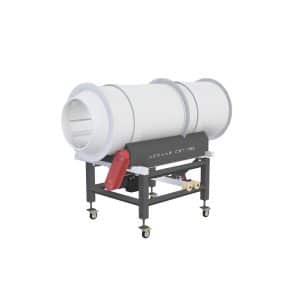
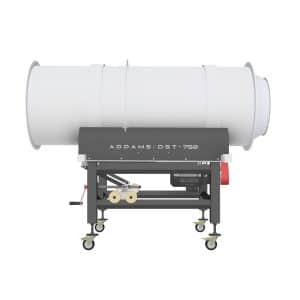
- Drum Seed Treater Machine
- Fine Seed Cleaners
- Jog Conveyor
- Semi Automated Weighing & Bagging Scales – 5 to 50 Kg
Share your product sample, target capacity, quality requirements and existing line layout. Request your custom quote from ADDAMS to evaluate equipment selection and process connections.


Reviews
There are no reviews yet.