



Batch Seed Treater and Coater for Controlled Recipe Application
The ADDAMS batch seed treater and coater is designed to apply treatment products to a measured quantity of seed in a controlled cycle. Batch operation is useful when processors handle separate varieties, valuable seed lots, frequent recipe changes or applications that require documented dosing and mixing times.
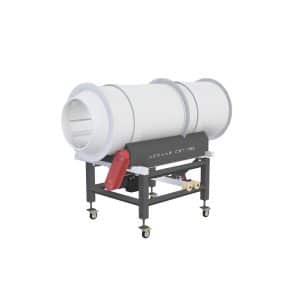
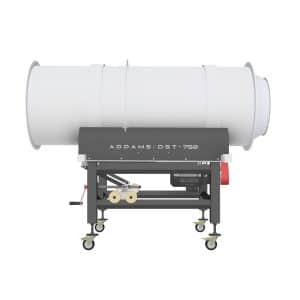
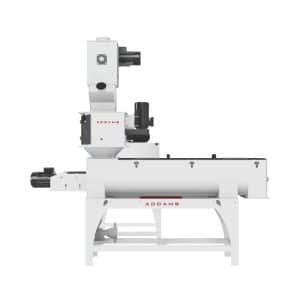
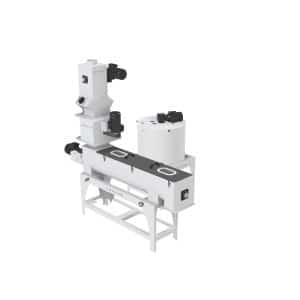
Seeds are weighed or metered into the treatment chamber, mixed while the selected liquid is applied, and discharged after the programmed cycle. The equipment can be configured around crop, batch size, treatment rate, liquid properties, throughput and cleaning procedure.
Applications for Seed Treatment and Coating
The machine can be considered for cereals, maize, pulses, oilseeds, forage seed, vegetable seed and other suitable agricultural products. Depending on the approved recipe and local rules, applications may include crop-protection products, polymers, colorants, micronutrients, biological products or inoculants.
Each product has different viscosity, suspension behavior, compatibility and handling requirements. Some formulations settle quickly, foam, react with other ingredients or require controlled storage temperature. Chemical suppliers’ instructions and applicable regulations must be followed when selecting tanks, pumps, seals, hoses and operating procedures.
Why Choose a Batch Seed Treater?
A batch system processes a defined seed mass before discharge. This makes it practical for recipe-based production, identity-preserved lots and frequent crop changes. Operators can set the seed quantity, treatment dose, spray time, mixing time and discharge sequence for each approved recipe.
Batch treatment is not automatically more accurate than every continuous system; performance depends on weighing, dosing, calibration, mixing and operator control. Its main advantage is the ability to repeat a defined cycle and separate one lot from the next. It can also provide time for staged liquid addition when the formulation permits it.
Typical Treatment Cycle
- Seed loading: Clean seed enters a weighing hopper or measured feed system. Foreign material should be removed before treatment.
- Batch confirmation: The control system confirms the seed mass and selects the approved recipe for that crop and lot.
- Mixing start: The chamber or mixing elements begin moving the seed at the selected speed.
- Liquid dosing: Pumps deliver the calculated treatment volume to spray nozzles or another distribution device.
- Coating and distribution: Mixing continues for the programmed period to spread the liquid across the seed surfaces.
- Discharge: Treated seed leaves the chamber for conditioning, drying, bagging or the next approved process step.
Actual timing and sequence are determined during trials and commissioning. Excess liquid can cause wet discharge, clumping or coating loss, while insufficient application can create uneven coverage. Visual checks and analytical quality-control methods should be defined by the seed processor.
Main Components and Configuration Options
| Component | Function and selection considerations |
|---|---|
| Seed weighing or metering | Measures each batch so the liquid dose can be calculated from the approved application rate. |
| Treatment chamber | Contains the seed during spraying and mixing. Geometry is selected for crop flow and cleaning access. |
| Mixing system | Moves seed to distribute treatment while limiting unnecessary impact or abrasion. |
| Liquid preparation tank | Holds the prepared formulation and may include agitation where permitted by the product instructions. |
| Dosing pumps | Deliver measured liquid. Pump type is matched to viscosity, chemical compatibility and required flow. |
| Spray system | Introduces liquid into the moving seed mass through selected nozzles or distribution elements. |
| PLC and operator interface | Controls recipes, sequence timing, alarms and available production records. |
Contact parts may be supplied in suitable stainless steel or another compatible material according to the treatment product and cleaning regime. Final construction, seals and surface finish are confirmed for the project.
Dosing Accuracy and Calibration
The required liquid quantity is normally calculated from seed mass and the formulation’s approved application rate. Reliable dosing depends on accurate seed weighing, pump calibration, stable liquid condition and correct recipe entry. Flow meters, load cells or timed volumetric dosing may be used depending on the configuration.
Calibration must be checked with the actual formulation because water alone may behave differently from a viscous or particulate suspension. Operators should verify pump output, inspect spray patterns and document corrections. Automatic controls reduce repetitive manual steps, but they do not replace routine calibration or quality checks.
Mixing Quality and Seed Protection
Uniform coating requires the treatment liquid to contact a moving seed mass without creating excessive abrasion. Mixing speed, fill level, spray position and cycle time work together. A chamber that is overfilled may not mix effectively, while excessive mixing can damage fragile seed or remove previously applied material.
Different crops may need different settings. Large maize kernels, smooth pulses, small vegetable seed and irregular forage seed do not move in the same way. Representative trials help establish operating parameters and acceptance criteria for coverage, dust-off, clumping, flowability and visible seed damage.
Recipe Control and Traceability
A PLC-based system can store approved recipe parameters such as batch mass, dose, spray duration, mixing time and discharge delay. Access levels may be used to limit unauthorized recipe changes. Available records can include batch identification, operator, time, selected recipe and alarm events.
Traceability requirements vary by market and certification scheme. The machine can support production records, but regulatory compliance also depends on material approval, labeling, operator training, quality procedures and data management across the complete plant.
Changeover and Cleaning
Cleaning is especially important when changing crop varieties, treatment products or colorants. Residual treated seed or chemical can contaminate the next batch. The chamber, discharge gate, spray components, tanks, hoses and pumps should therefore be accessible for the approved cleaning method.
Drain points, removable nozzles and inspection doors can be incorporated where appropriate. Waste liquid and wash water must be collected and handled according to the chemical supplier’s instructions and local environmental regulations. It should not be released into ordinary drainage without authorization.
Integration with the Seed Processing Line
The batch treater may receive cleaned and graded seed from a buffer hopper or weighing system. Downstream equipment can include a fluid bed dryer, conditioning conveyor, holding bin, bagging scale or bulk-container filling station. The line should prevent untreated and treated seed from mixing.
Throughput depends on batch mass and total cycle time, including loading, spraying, mixing and discharge. Buffer capacity is important so that upstream cleaning equipment does not overload the treater and downstream equipment can accept each discharge without interruption.
Ventilation and Operator Safety
Seed-treatment products may create exposure risks through liquid, vapor, aerosol or contaminated dust. The installation should include suitable enclosure, local extraction, guarding, spill control and restricted access based on the safety data sheets and site risk assessment.
Operators require training, appropriate personal protective equipment and clear procedures for preparation, loading, cleaning and spills. Emergency stops, interlocked access and safe isolation must be incorporated according to the final machinery and local requirements.
Maintenance and Process Checks
Routine inspection should cover load cells, pumps, hoses, seals, nozzles, mixers, bearings, discharge gates and safety devices. Worn nozzles or leaking valves can change the applied dose. Treatment tanks should be checked for sediment or contamination, and filters cleaned at the specified intervals.
Quality checks can include batch weight, actual liquid consumption, visual coverage, treated-seed moisture, dust-off and germination testing where relevant. Results should be compared with the processor’s approved specification.
Frequently Asked Questions
What seeds can be processed in a batch seed treater?
Many cereals, pulses, oilseeds, forage and vegetable seeds can be considered. Chamber geometry and operating settings must match the crop’s size, flow and fragility.
How is the correct treatment dose calculated?
The approved application rate is combined with measured seed mass. The dosing system must then be calibrated using the actual formulation.
Can several liquids be applied in one cycle?
Staged application may be possible when the products are approved and chemically compatible. The formulation supplier’s mixing order and instructions must be followed.
Can the machine store treatment recipes?
A PLC configuration can store controlled recipe parameters and batch records, depending on the automation package.
Does treated seed need drying?
That depends on liquid addition, formulation, seed behavior and downstream requirements. A conditioning conveyor or fluid bed dryer may be used when additional moisture must be removed.
What information is needed for a quotation?
Please provide crop types, seed size, batch mass, hourly throughput, treatment rates, liquid properties, number of formulations, cleaning procedure, electrical supply and required automation records.
Request a Batch Seed Treater Proposal
Share your crops, recipes, batch requirements and process layout with ADDAMS. Our team can propose a treatment chamber, dosing package, controls and line arrangement suited to the stated application and safety requirements.
Related Equipment and Process Options
Compare treatment methods and plan lot preparation, grading and packaging around the batch requirements.
- Continuous Seed Treater Machine
- Drum Seed Treater Machine
- Fine Seed Cleaners
- Optimum 220 Series Screen Grader
- Semi Automated Weighing & Bagging Scales – 5 to 50 Kg
Share your product sample, target capacity, quality requirements and existing line layout. Request your custom quote from ADDAMS to evaluate equipment selection and process connections.

Reviews
There are no reviews yet.