

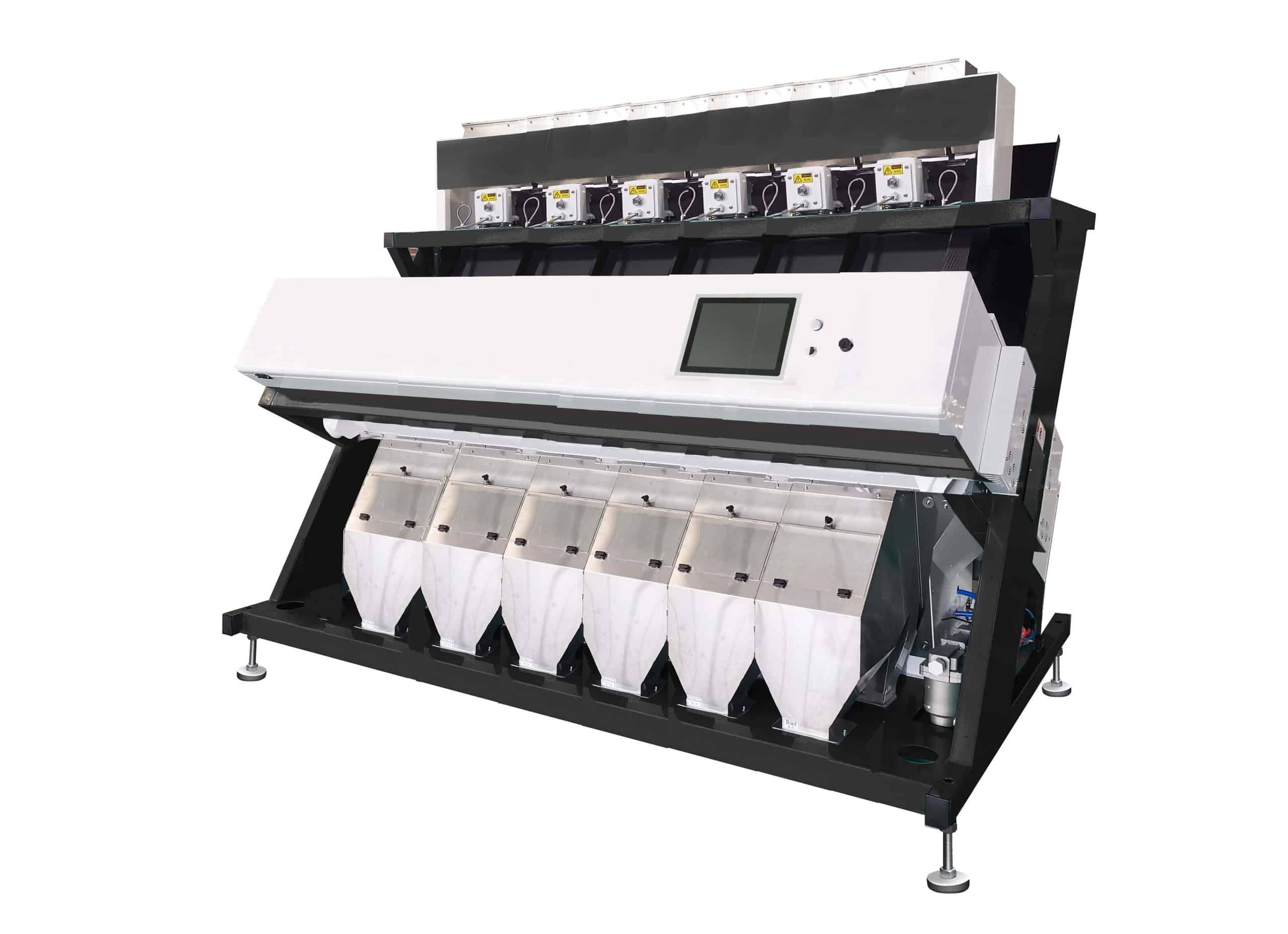
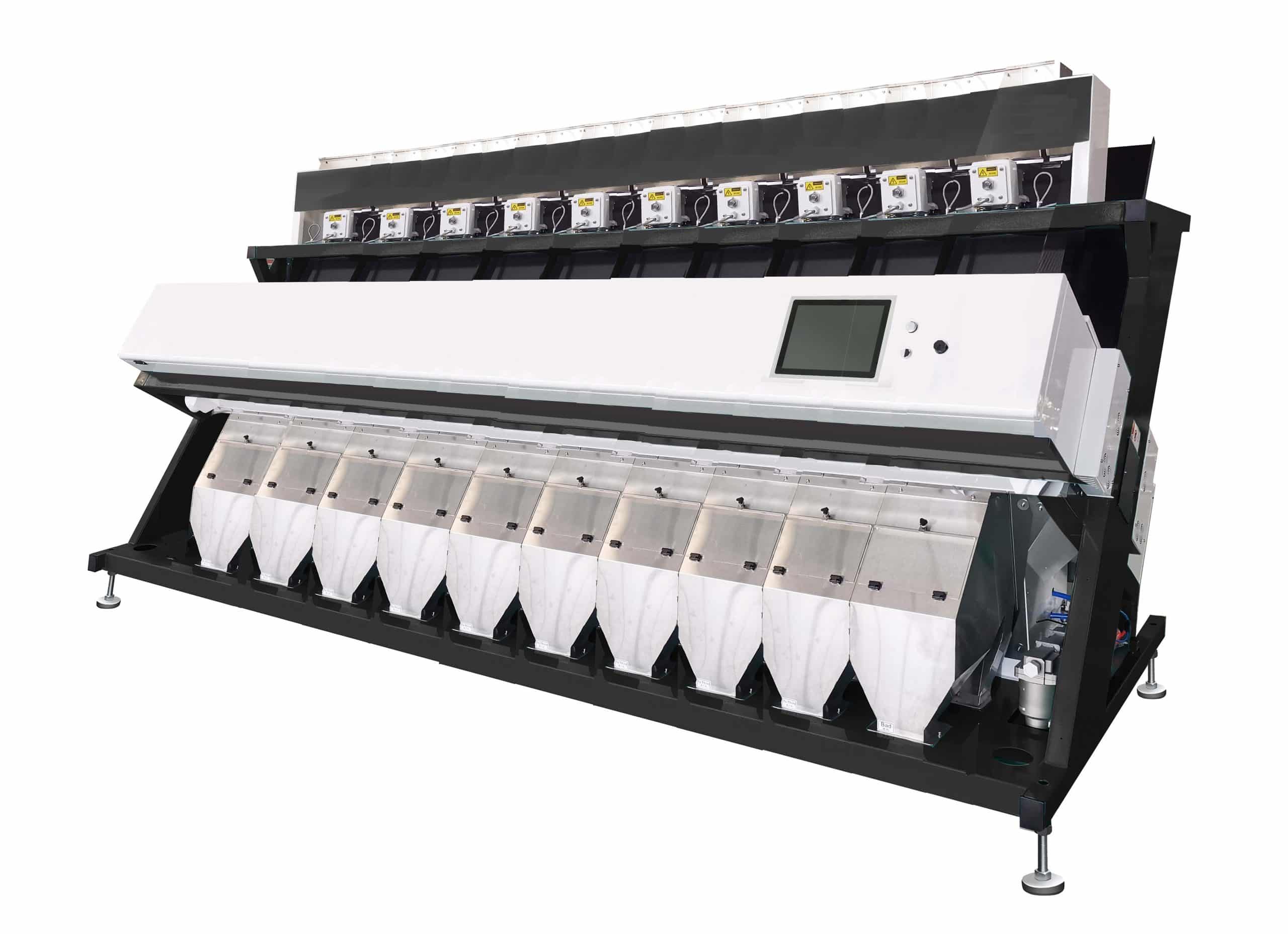
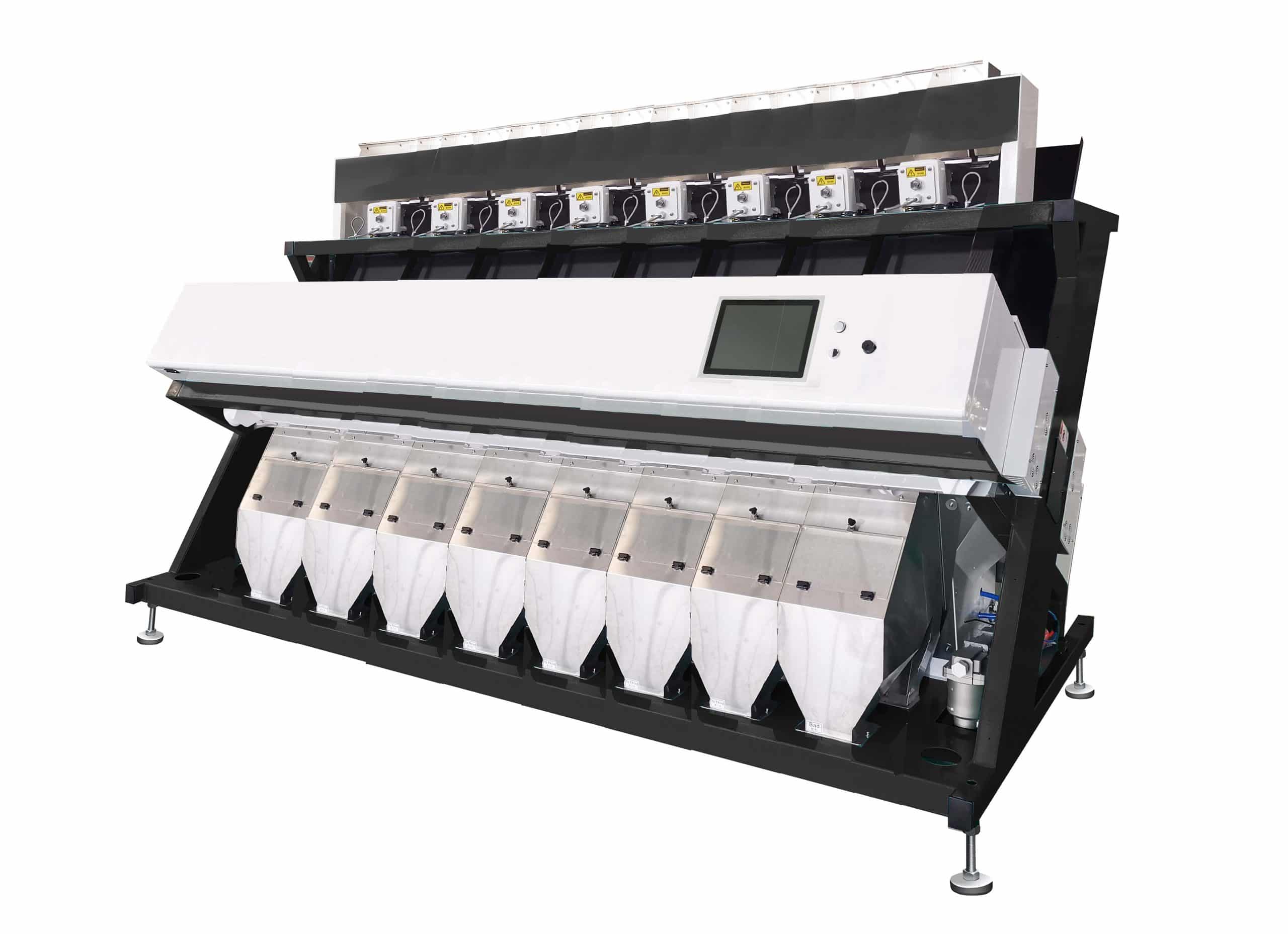
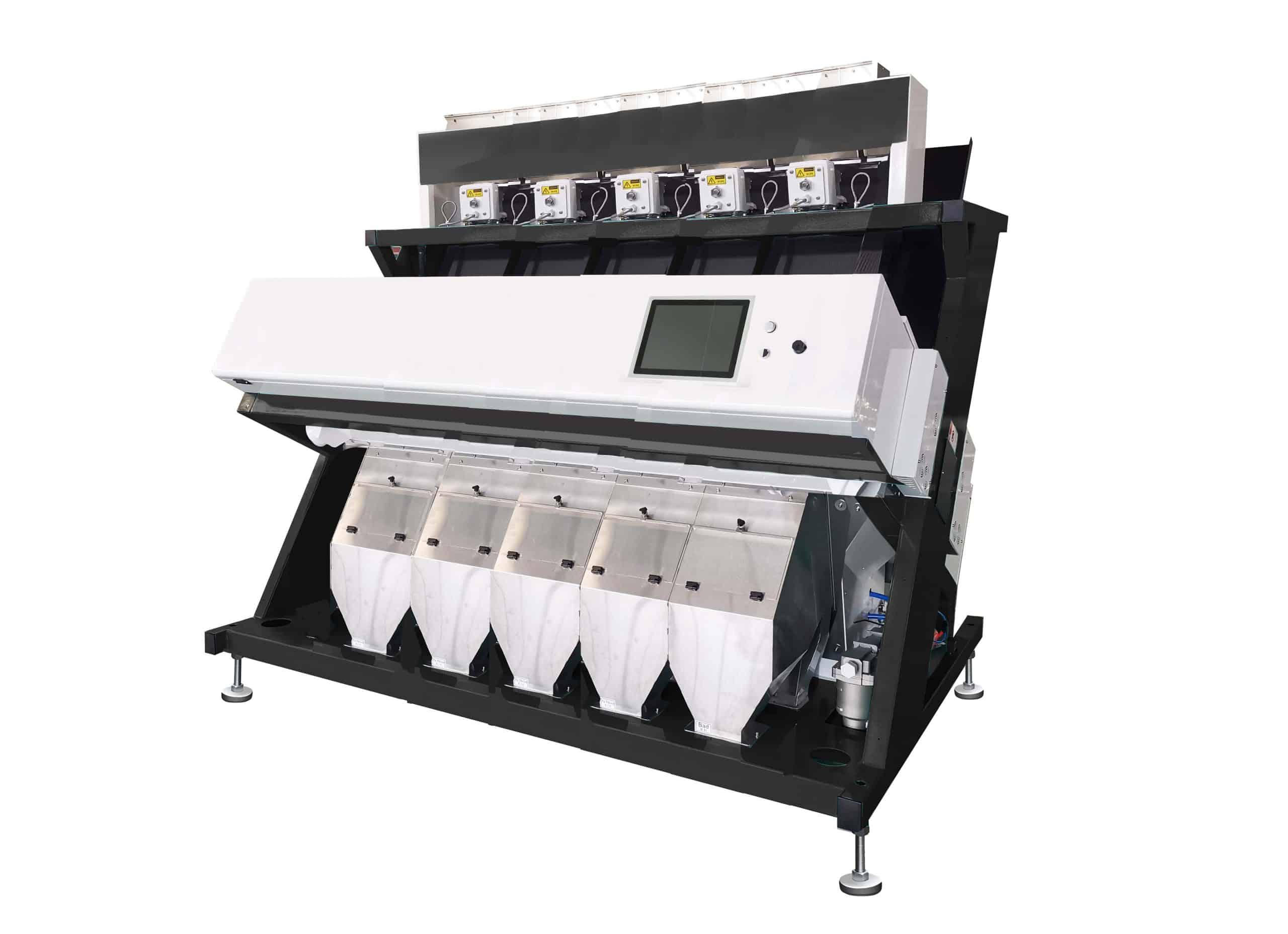
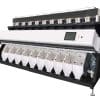
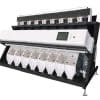
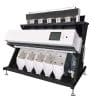
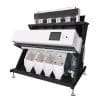
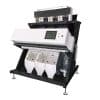
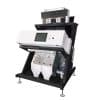
Optical Color Sorter Machine for Seeds, Grain and Pulses
The ADDAMS optical color sorter removes discoloured product, foreign material and visual defects that may remain after mechanical cleaning. It is typically installed near the final stage of a seed, grain, pulse or food-processing line, where cameras inspect each particle and high-speed ejectors separate accepted product from reject material.
Mechanical cleaners classify material according to size, shape, length and density. Optical sorting adds another layer of quality control by evaluating colour, brightness, contrast and other visible characteristics. Depending on the selected configuration, the system can be adapted for different crops, defect types and final quality standards.
How an Optical Color Sorter Works
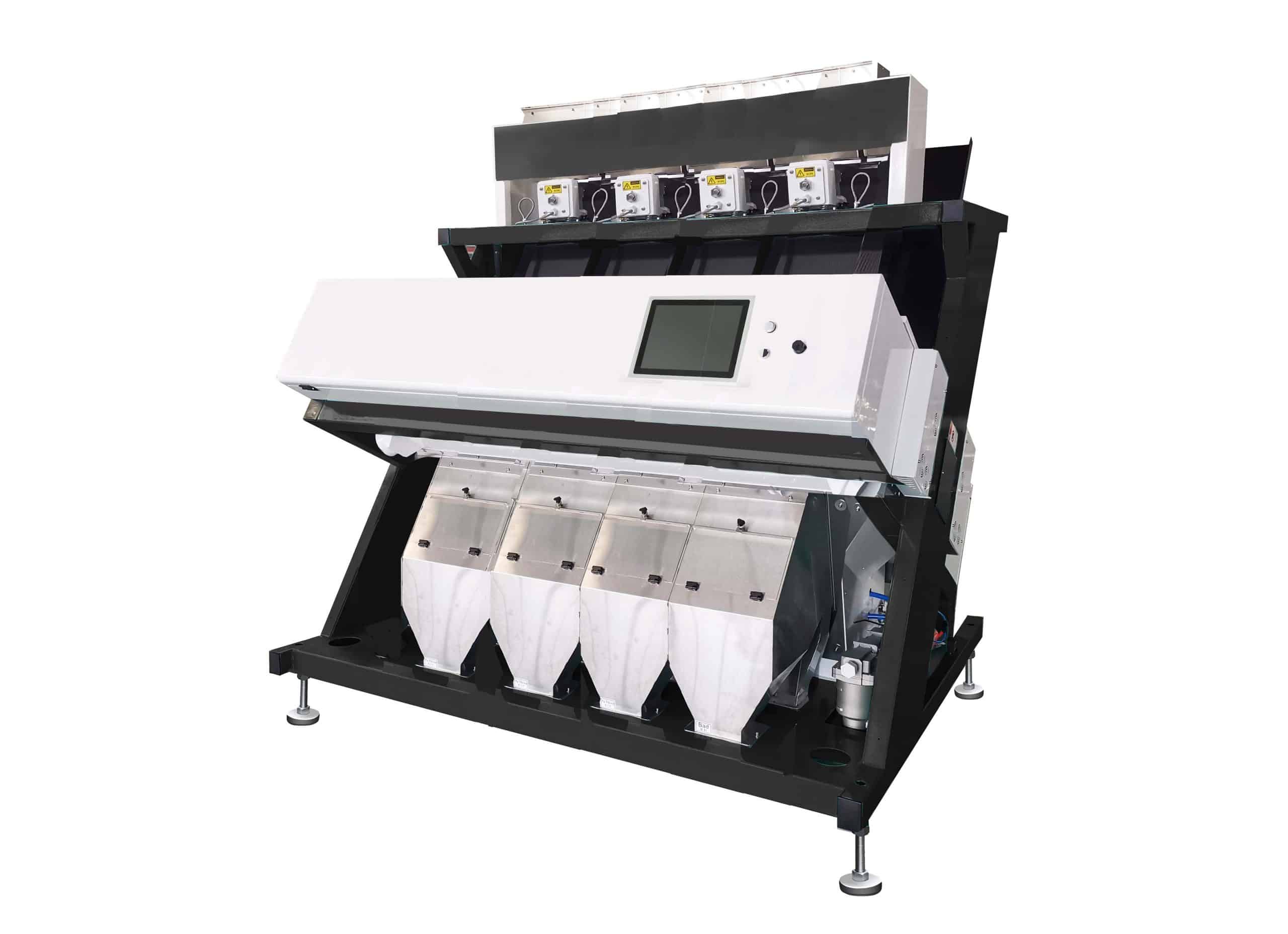
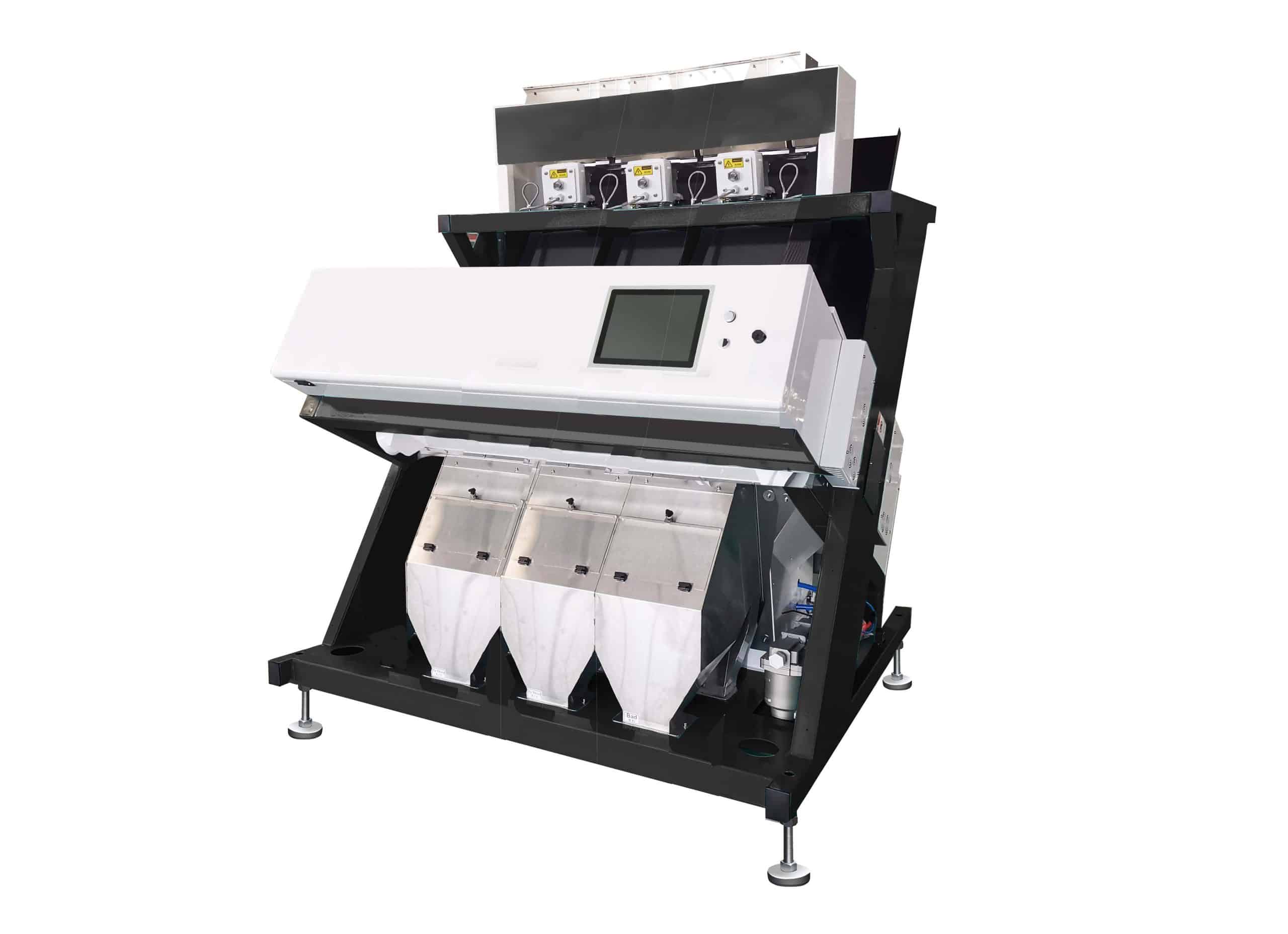
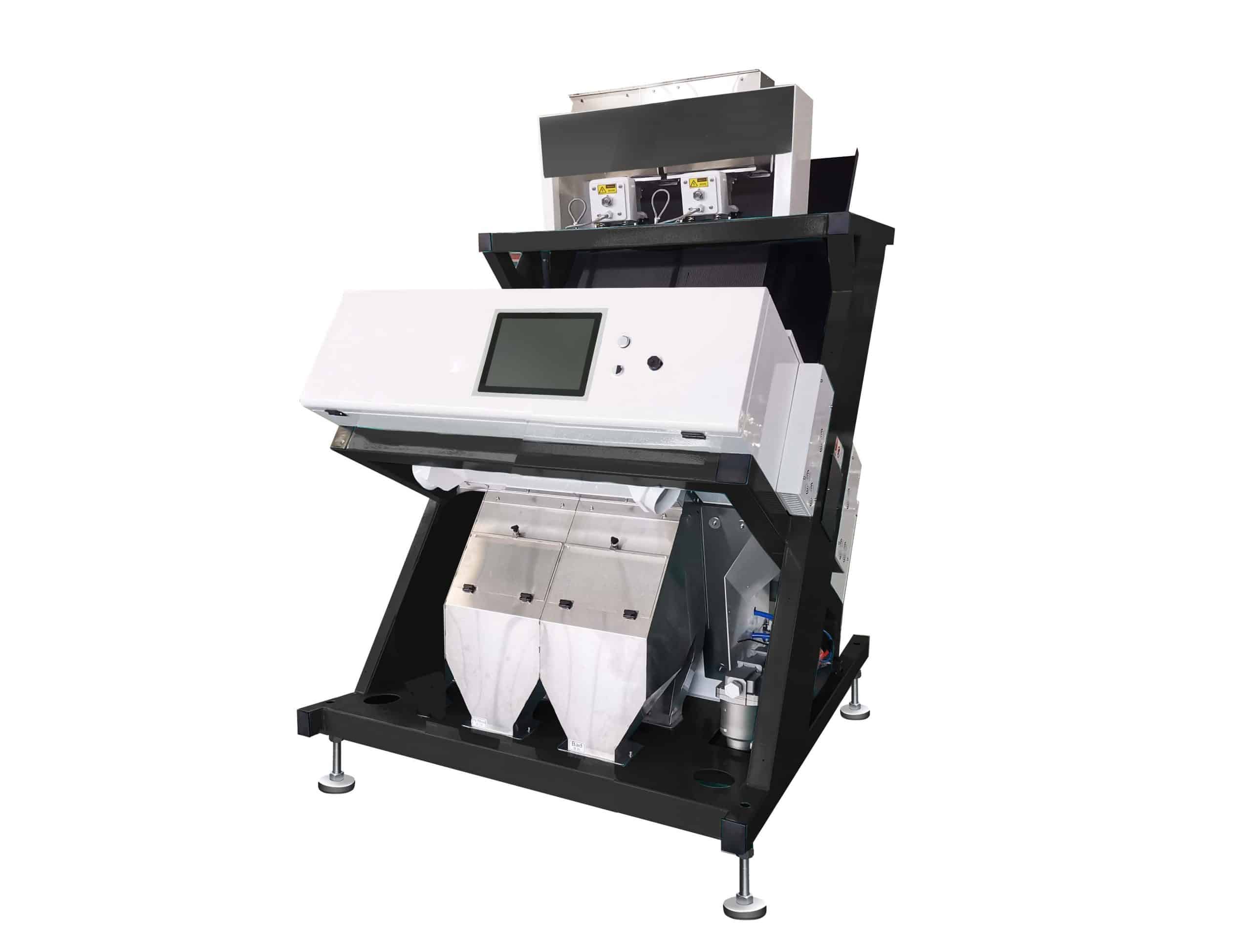
Clean, uniformly fed product enters the sorter through a hopper and feed system. Vibratory feeders distribute the material into individual channels or chutes, creating a thin and stable product curtain. As the particles accelerate through the inspection zone, controlled lighting illuminates them and cameras capture images from the required viewing directions.
The control system compares each particle with the active sorting recipe. When a particle matches the programmed reject criteria, the machine calculates its position and activates the corresponding high-speed air ejector. A short pulse of compressed air diverts the defect into the reject outlet while acceptable product continues to the clean-product outlet.
This process takes place continuously and at high speed. Sorting quality depends on stable feeding, correct camera calibration, suitable lighting, clean optics, reliable compressed air and a well-prepared recipe.
Typical Defects the Sorter Can Detect
- Colour variation: dark, pale, stained, burnt or otherwise discoloured particles.
- Foreign material: selected stones, glass, plastic, husk, stalk or other material with a detectable visual difference.
- Biological damage: selected insect-damaged, mould-affected or diseased kernels when the defect is visible.
- Processing defects: broken, peeled, scorched or improperly processed product where the exposed surface creates sufficient contrast.
- Variety contamination: off-colour seeds or grains mixed into a visually uniform lot.
- Shell and skin defects: selected unhulled, partially hulled or surface-damaged product.
Optical sorting cannot detect every hidden defect. Internal damage with no visible difference may require another inspection method, density separation, laboratory testing or specialised sensor technology.
Suitable Products and Applications
- Cereal grains: wheat, rice, maize, barley, oats and rye.
- Pulses: lentils, chickpeas, peas, beans and faba beans.
- Oilseeds: sunflower, sesame, rapeseed and similar products.
- Sowing seeds: vegetable, forage, grass and field-crop seeds.
- Herbs and spices: selected leaves, seeds and granular spice products.
- Coffee and cocoa: visual classification of suitable beans after upstream cleaning.
- Nuts and speciality foods: selected products where colour and surface defects provide a clear sorting signal.
Product testing is recommended for difficult applications, subtle defect differences or products with high natural colour variation.
Main Components of the Optical Sorting System
| Component | Function |
|---|---|
| Feed hopper and vibratory feeders | Provide stable, controlled and evenly distributed product flow |
| Channels or chutes | Guide particles through the inspection area in a consistent trajectory |
| Lighting system | Creates repeatable illumination and contrast for reliable image capture |
| Digital cameras | Record particle colour and visible surface characteristics |
| Processing software | Compares captured images with the selected acceptance and rejection criteria |
| Air ejectors | Remove identified defects using short, accurately timed compressed-air pulses |
| User interface | Allows recipe selection, sensitivity adjustment, monitoring and operator control |
| Clean and reject outlets | Keep accepted product and ejected material in separate process streams |
Main Advantages
- Final-stage quality improvement: removes visible defects that remain after conventional mechanical cleaning.
- Adjustable sorting recipes: operating parameters can be stored and adapted for different crops, varieties and quality grades.
- Non-contact inspection: cameras analyse product without mechanical measurement or destructive testing.
- Targeted rejection: individual ejectors remove selected particles while allowing acceptable product to continue.
- Flexible sensitivity: thresholds can be balanced according to the required purity and acceptable product loss.
- Process monitoring: the operator can observe sorting performance and make controlled recipe adjustments.
- Plant integration: the sorter can be connected to elevators, conveyors, buffer bins, aspiration and packing equipment.
Where the Color Sorter Fits in the Processing Line
An optical sorter performs best when the feed has already been cleaned and stabilised. A typical process may include pre-cleaning, fine screening, de-stoning, density separation and length grading before optical sorting. These upstream machines remove bulk impurities and divide the product into more consistent fractions.
Feeding an optical sorter with excessive dust, large impurities or highly variable particle sizes can reduce inspection stability and waste compressed air. Installing the sorter near the final cleaning stage allows it to focus on subtle visual defects rather than performing work better suited to mechanical equipment.
Machine Selection and Channel Configuration
Color sorters are available with different numbers of chutes or channels. The correct configuration depends on product size, bulk density, flow characteristics, required capacity, incoming defect level and the desired final quality.
For selection, customers should provide:
- Product type, variety and particle size range
- Required hourly capacity
- Photographs or samples of accepted and rejected material
- Approximate incoming defect percentage
- Required final quality standard
- Available compressed-air capacity and quality
- Details of upstream cleaning and downstream handling
Compressed Air Requirements
The ejector system requires clean, dry and stable compressed air. Pressure fluctuation, oil contamination, moisture or insufficient flow can reduce rejection accuracy and damage pneumatic components. The air system should be sized for the machine configuration, product flow and expected reject rate.
A complete installation may require a compressor, air receiver, dryer, filters, pressure regulation and correctly sized distribution piping. ADDAMS coordinates these requirements during project engineering; final compressor selection should follow the confirmed sorter specification.
Recipe Development and Commissioning
A sorting recipe defines what the machine accepts and rejects. During commissioning, representative good product and known defects are used to establish colour ranges, sensitivity and ejector timing. Samples from both outlets are then checked to balance final purity against acceptable-product recovery.
Overly aggressive settings may improve the appearance of the clean fraction but reject too much valuable product. Settings that are too tolerant may leave defects in the accepted stream. The correct recipe reflects the customer’s commercial standard, incoming material and downstream use.
Recipes should be reviewed when crop variety, harvest year, moisture, upstream cleaning or defect profile changes.
Operating and Maintenance Considerations
Camera windows, lighting surfaces and chutes must remain clean. Dust or product residue can alter image quality and interfere with stable product flow. Operators should follow a routine inspection and cleaning schedule without damaging optical surfaces.
Maintenance should include feeders, chutes, ejector valves, air filters, electrical cabinets, cooling systems and software backups. Reject and accept samples should be checked regularly rather than relying only on the machine display.
Optional Features and Integration
Depending on the application, available options may include alternative camera configurations, different chute counts, specialised lighting, dust extraction connections, secondary sorting arrangements, remote service functions and integration with plant control systems. Final features are selected after reviewing the product and quality objective.
ADDAMS can supply the optical sorter as a standalone machine or integrate it into a complete seed, grain, pulse, herb, coffee or cocoa processing line.
Frequently Asked Questions
Does a color sorter replace mechanical cleaning machines?
No. Screens, de-stoners, gravity separators and indented cylinders remove impurities according to physical properties. The optical sorter is most effective after those stages, where it can focus on remaining visible defects.
Can the sorter detect internal defects?
A standard camera system detects visible surface differences. Defects with no external colour or contrast difference may not be recognised unless the selected machine includes a suitable additional sensor technology.
Why is product testing important?
Natural colour variation and defect appearance differ between crops and varieties. Testing shows whether the target defect creates enough contrast and helps determine capacity, recovery and recipe strategy.
What causes excessive good product in the reject stream?
Common causes include overly sensitive settings, unstable feeding, dirty optics, incorrect illumination, air-pressure problems or a defect colour that overlaps with acceptable product.
Can recipes be saved for different products?
Yes. Recipes can be stored and recalled, but they should be checked against the actual incoming lot because harvest and storage conditions can change product appearance.
What utilities are required?
The machine requires a suitable electrical supply and clean, dry compressed air. Dust extraction, room conditions and product handling connections should also be reviewed during installation planning.
Request a Color Sorter Evaluation
Send ADDAMS your product samples or clear images of accepted and rejected material, required capacity, defect percentage and final quality target. Our process engineering team can recommend the appropriate optical sorter configuration and its position within your processing line.
Related ADDAMS Processes and Equipment for Optical Sorting
Use the optical sorter separation guide to define the visible defects and accepted product range. Compare upstream Fine Seed Cleaners with the air screen separation process guide and Gravity Separator with the density separation guide. Explore lentil processing, sunflower seed processing and cocoa bean processing for application context.
What samples should be prepared for a sorter evaluation?
Provide representative incoming material, examples of acceptable product and examples of the defects to reject. Agree capacity, accepted recovery and good product loss, and review electrical supply, compressed air and material handling through the ADDAMS contact page. Confirm detection performance from trials rather than assuming every defect is visible to the selected sensors.
Reviews
There are no reviews yet.