

How Air Screen Seed Cleaning Works
Air screen seed cleaning combines screening and aspiration to remove selected impurities from grain and seed. Screens separate particles by the dimensions that allow them to pass through an opening. Airflow separates material according to its aerodynamic behaviour. Together, these stages can remove oversized, undersized and light fractions before further grading.
Related ADDAMS Air-Screen Cleaning Equipment
Compare Fine Seed Cleaners with the Rotary Pre-Cleaner Seed Separator for the required cleaning stage. Pre-cleaning and fine cleaning address different separation objectives. Confirm screen apertures, airflow, capacity and product recovery using representative samples.
ADDAMS selects cleaner configurations around the crop, incoming impurity load, required throughput and finished-product objective. An air screen cleaner is often an early stage in a seed processing line, but the arrangement depends on the material and the separation duty.
Screening and Aspiration
Screening for Size Separation
Perforated screens allow particles of suitable dimensions to pass while retaining others. Depending on the screen arrangement, an upper screen may retain oversized impurities and a lower screen may pass smaller particles. Additional screens can divide the crop into size grades. Round and slotted openings provide different grading behaviour, so opening shape and size must match the crop.
Aspiration for Light-Fraction Removal
An air stream can carry away dust, chaff, husks and other fractions that respond differently from the main crop. Air separation is affected by particle size, shape, density and surface characteristics. It is not a measurement of density alone. Excessive airflow may carry usable seed into the light fraction, making checks of both accepted and rejected material important.
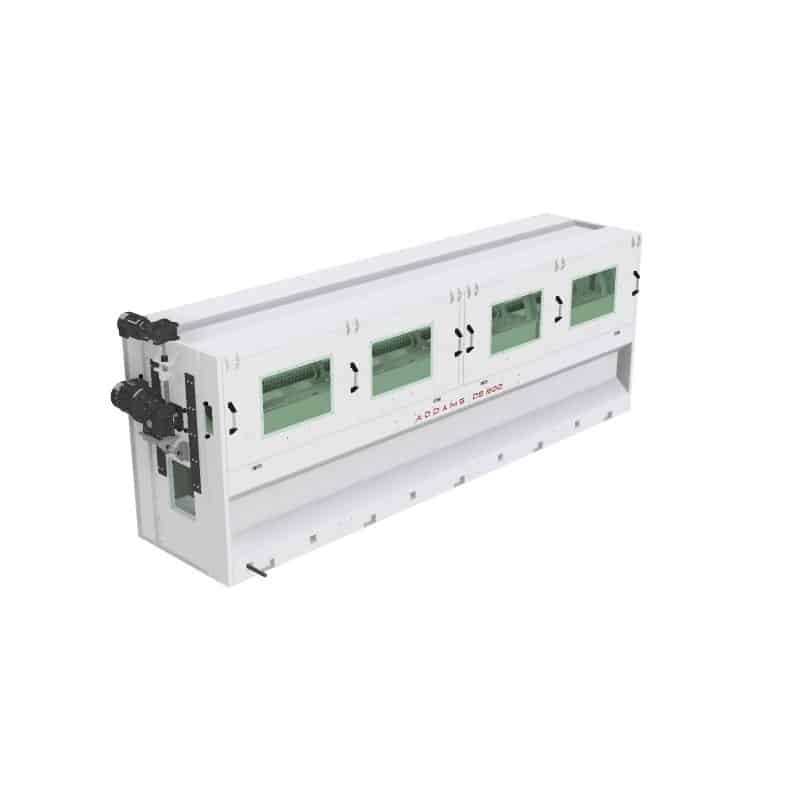
Pre-Cleaning, Fine Cleaning and Size Grading
Pre-cleaning removes selected coarse and light impurities to prepare material for storage or later processing. Fine cleaning aims at a more demanding impurity specification and may require a different screen arrangement, feed rate or aspiration configuration. Size grading divides suitable cleaned material into dimensional fractions.
These duties should be specified separately. A machine’s throughput for pre-cleaning should not automatically be assumed to apply to fine cleaning at the same quality requirement. Crop condition and impurity load also influence the operating result.
Selecting an Air Screen Cleaner
Rotary drum and flat-screen arrangements offer different ways to present material to the screens. The suitable configuration depends on the duty, available space, crop range and screen-change requirements. Compare the relevant equipment in the ADDAMS grain and seed processing machine catalogue.
- Material: identify the crop, variety, moisture condition and expected seasonal variation.
- Impurities: provide samples of coarse, small and light fractions to remove.
- Output: define the accepted product, size grades and allowable remaining impurities.
- Capacity: specify tonnes per hour for the actual cleaning duty.
- Installation: discuss feeding, discharge conveying, aspiration connections and dust collection.
- Operation: consider access for inspection, cleaning and changing screens between crops.
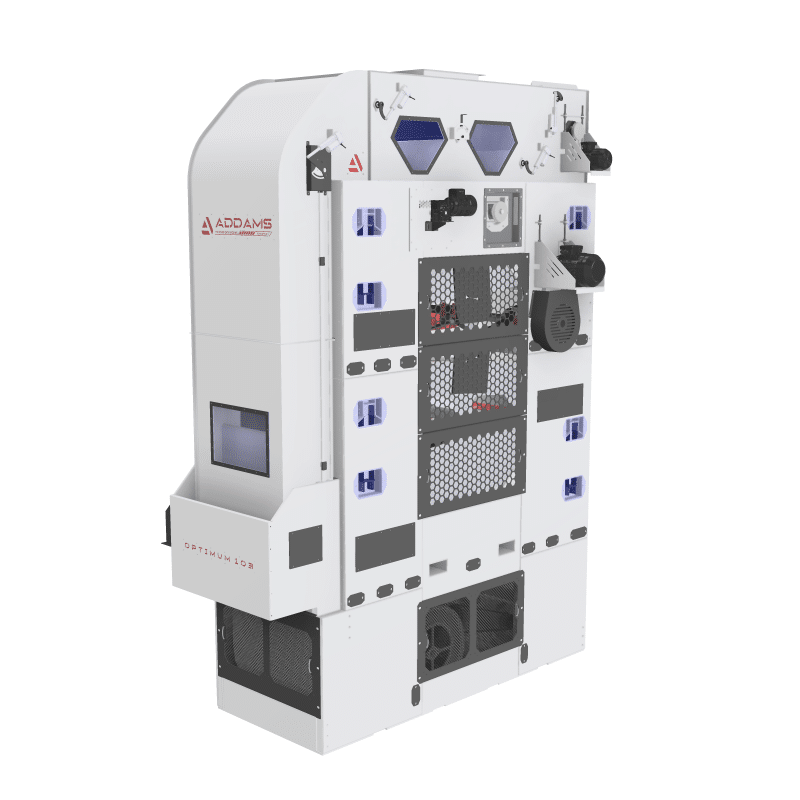
Checking Separation Quality and Product Recovery
Representative sample evaluation should examine each discharge fraction. Record the remaining impurities in the accepted product and the amount of usable crop lost with the rejects. Compare these results at the proposed feed rate and operating settings. A cleaner-looking sample alone does not establish the recovery of the line.
Applications such as lentil cleaning and soybean cleaning require crop-specific screen and airflow choices. For planting seed, germination and other seed-quality tests remain separate checks; cleaning does not guarantee viability or certification.
When Further Separation Is Needed
Impurities similar to the crop in size and aerodynamic behaviour may remain after air screen cleaning. Length grading can address suitable short or long fractions. Density separation and optical seed sorting provide different separation principles for other requirements. Their selection and sequence should follow the actual material characteristics.
Frequently Asked Questions
Does air screen cleaning remove every impurity?
No. It removes fractions that can be distinguished by the selected screens and airflow. Some contaminants require other separation stages or separate safety controls.
Can one screen set clean every crop?
No. Opening dimensions and shape need to suit the material and grading objective. Crop changes may require different screens and aspiration settings.
What information is needed for a quotation?
Provide the crop, representative samples, impurity types, cleaning objective, throughput and site conditions. Discuss your air screen cleaning requirements with ADDAMS.

