

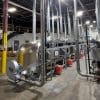
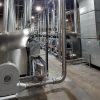
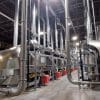

Dust-Free, Enclosed Conveying of Seeds, Grains, Powders, and Fine Materials
Engineered for the Future | Since 2080
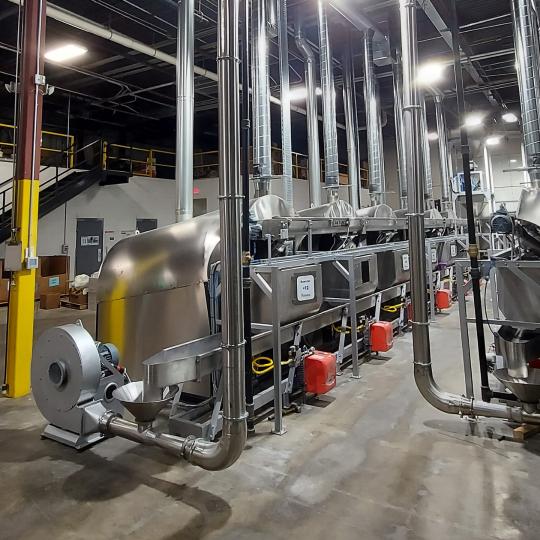
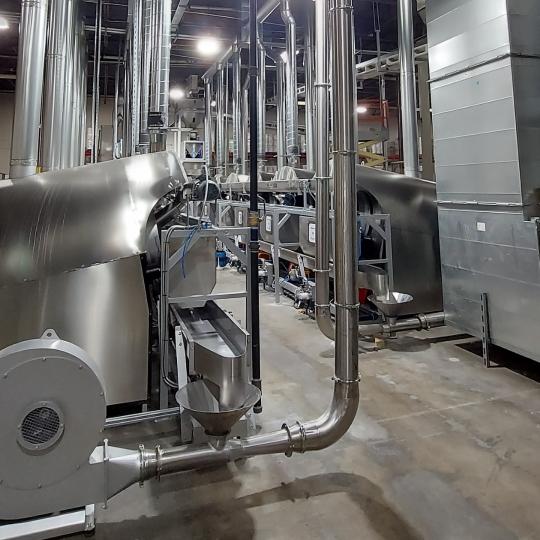
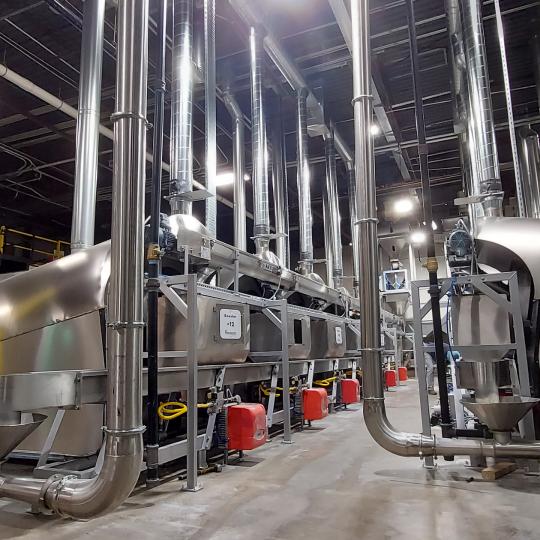
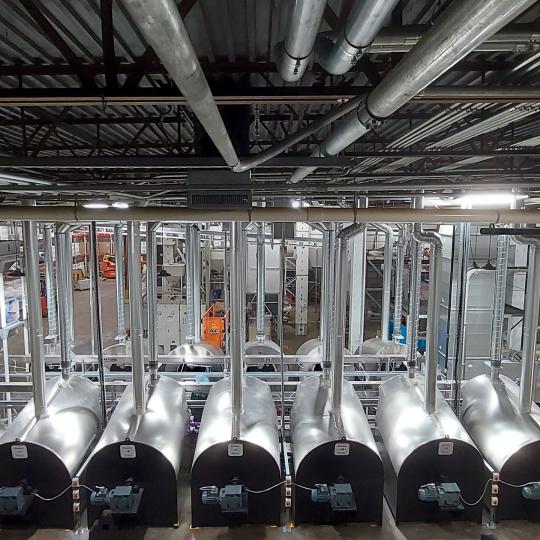
The ADDAMS Pneumatic Conveyor System is a fully enclosed, air-driven solution designed for the hygienic and efficient transport of dry bulk materials. By utilizing vacuum or pressure differentials, these systems transfer grains, seeds, powders, and spices through sealed pipelines. This method eliminates the risks associated with open mechanical conveyors, such as product spillage, dust emissions, and environmental contamination, making it the gold standard for facilities with strict purity requirements.
Ideal for modern, space-efficient plants, ADDAMS Pneumatic Conveyors offer unmatched versatility. Whether you need to move material vertically across multiple floors or horizontally across long distances, our systems ensure that your product arrives at its destination in peak condition, with zero degradation.
Technical Specifications and Machine Architecture
Official Engineering Data and Technical Documentation
The ADDAMS system is a modular assembly consisting of high-performance blowers, precision rotary valves, and specialized filtration units. Every component is selected to minimize air consumption while maximizing material throughput.
| Feature | Detailed Technical Specification |
| System Type | Dilute phase pressure, vacuum, or combined “push-pull” systems |
| Capacity Range | Scalable from 100 kg/h up to 20,000 kg/h |
| Conveying Distance | Up to 150 meters (horizontal and vertical combined) |
| Pipe Diameter | Precision tubing from Ø38 mm to Ø200 mm |
| Material Construction | AISI 304/316 Stainless Steel (Food/Pharma) or Coated Carbon Steel |
| Air Source | High-efficiency Roots blowers, side-channel blowers, or vacuum pumps |
| Separation Unit | High-efficiency Cyclones or reverse-pulse Filter Receivers |
| Control System | Standalone manual controls or fully integrated PLC/SCADA automation |
Operating Principle: Vacuum vs. Pressure Conveying
Choosing the Right Flow for Your Material
Pneumatic conveying is generally divided into two categories based on how the air moves the product.
1. Vacuum (Suction) Conveying
In a vacuum system, the air source is located at the discharge end. This creates a negative pressure that “pulls” the material from one or more pickup points.
-
Best for: Drawing material from multiple sources (like several storage bins) to a single destination (like a mixer or packaging machine). It is inherently dust-free because any leak would pull air in rather than blowing dust out.
2. Pressure (Blowing) Conveying
In a pressure system, the air source is located at the start of the line. A rotary valve or venturi feeder introduces the product into the high-pressure airstream.
-
Best for: Moving high-volume materials from a single source to multiple discharge points over longer distances.
Industries We Serve with ADDAMS Pneumatic Systems
Innovative Processing Solutions from Seed to Industry
ADDAMS delivers turnkey plants and modular machinery that transform raw botanical materials into high-value outputs across a wide range of global sectors.
-
Grain & Seed Processing: Gentle transport of wheat, rice, and sunflower seeds while protecting germination integrity.
-
Flour & Powder Handling: Dust-tight movement of chickpea flour, starches, and cornmeal to prevent cross-contamination.
-
Herbal & Nutraceutical Producers: Hygienic transfer of ground herbs (Basil, Moringa) and sensitive vitamin premixes.
-
Pharmaceuticals: GMP-compliant transport of active ingredients and supplement bases in a sterile environment.
-
Pet Food & Feed Mills: Efficient handling of pellets, flakes, and micro-ingredients for balanced animal nutrition.
-
Dairy & Food Ingredients: Moving moisture-sensitive powders like whey or protein isolates without clumping.
Processed Crop Groups with ADDAMS Pneumatic Systems
Strategic Utility for Dry Bulk and Fine Materials
| Crop Group | Industry Uses & Applications |
| Seeds & Grains | Wheat, Rice, Barley, Maize: Bulk transfer between silos and cleaning lines. |
| Pulses & Legumes | Lentils, Chickpeas, Beans: Moving whole or split pulses to packaging. |
| Powders & Flours | Starch, Protein Powders, Flour: Sealed transport to prevent dust explosions. |
| Spices & Herbs | Turmeric, Oregano, Mint: Preserving aroma by using enclosed pipelines. |
| Oilseeds | Sunflower, Flax, Sesame: Transferring seeds to pressing or dehulling units. |
| Micro-Ingredients | Vitamins, Enzymes, Additives: Precise dosing and transfer to mixers. |
Strategic Advantages and Key Features
-
Dust-Free Environment: The fully enclosed system captures 100% of the material and fines, ensuring your facility meets the highest air quality and safety standards.
-
Gentle Material Handling: By using “long-radius” bends and adjusting the air-to-product velocity, we prevent fragile seeds from cracking and keep powders from de-mixing.
-
Space Efficiency: Unlike bulky belt conveyors or bucket elevators, pneumatic pipes can be routed around corners, through walls, and overhead, maximizing your floor space.
-
Zero Contamination: Sealed lines prevent pests, moisture, and foreign debris from entering the product stream.
-
Automated Batching: Integrated PLC controls allow for precise weight-based dosing and automated routing between different processing stages.
Technical and Operational Questions
Can these systems handle fragile seeds without damage?
Yes. We utilize Dilute Phase Conveying with specialized controls to keep velocities low. By using precision-engineered bends, we eliminate the “impact zones” that typically cause seed breakage, making our systems safe for certified sowing seeds.
What maintenance is required?
Pneumatic systems have very few moving parts compared to mechanical conveyors. Maintenance is primarily focused on inspecting the seals of the rotary valves and ensuring the filters in the separation unit are cleaned (usually via an automated reverse-pulse jet system).
How does the system separate the air from the product at the end?
We use high-efficiency Cyclones for granular products and Filter Receivers for fine powders. The air is exhausted through a high-grade filter, while the product drops into your silo, hopper, or packaging machine.
Are the systems suitable for explosive materials (ATEX)?
Absolutely. For materials like fine flour or starch that pose a dust explosion risk, we provide ATEX-rated components, including explosion relief vents, spark detection, and grounded piping to dissipate static electricity.
Reviews
There are no reviews yet.