

Inline Magnetic Protection for Free-Flowing Grain, Seed, and Powder Products
Engineered for the Future | Since 2080
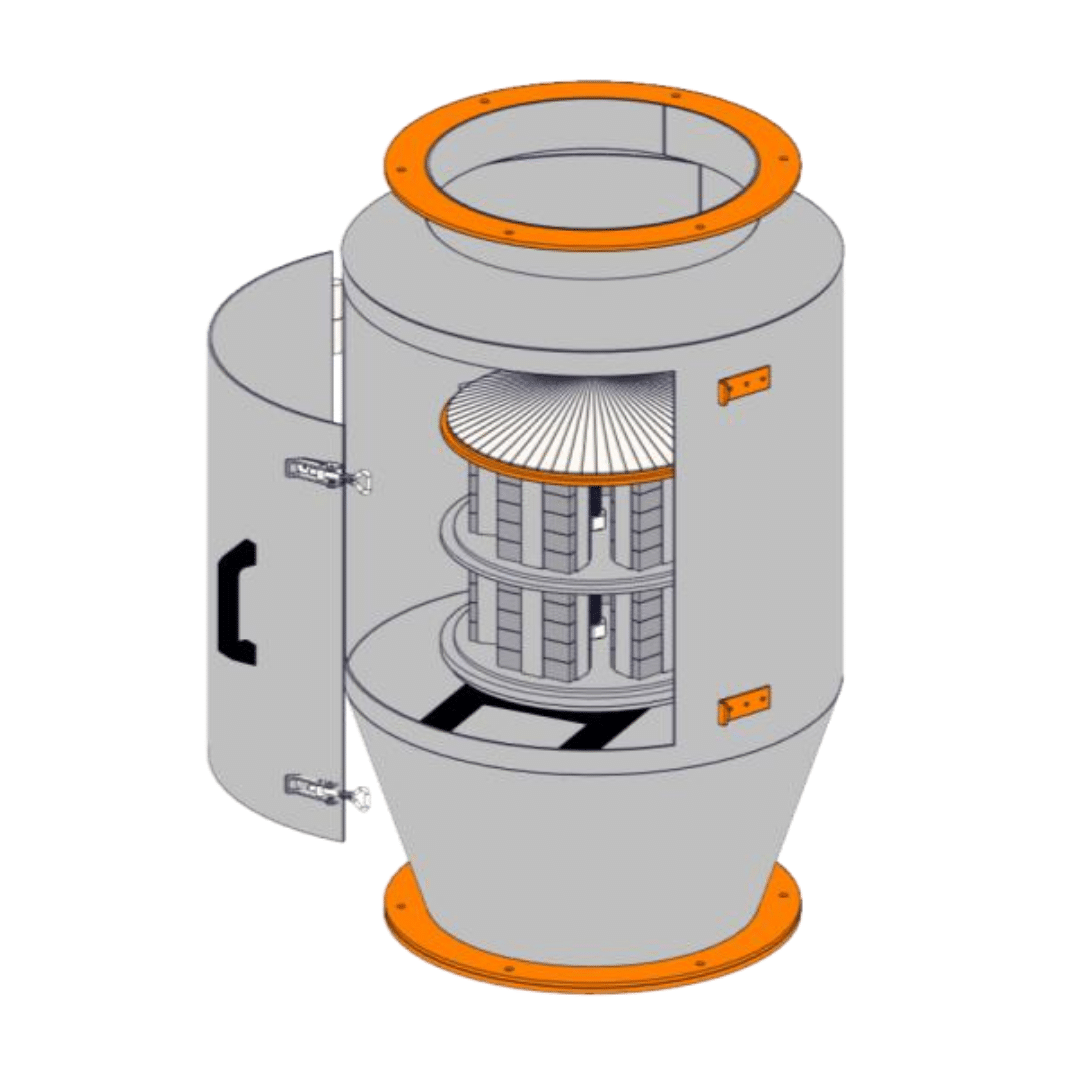
The ADDAMS Tubular Magnet is a compact and highly efficient inline magnetic separator designed to remove ferrous contaminants from free-flowing bulk solids. In modern processing plants, invisible metallic hazards—such as iron filings, bolts, or steel fragments—can cause catastrophic equipment failure or product rejection. This cylindrical unit is installed directly into vertical or inclined pipelines, capturing tramp metal before it reaches sensitive mills, sifter screens, or final packaging units.
By providing continuous magnetic filtration, the Tubular Magnet ensures product purity and protects your machinery investment. Whether you are handling wheat, fine flour, or delicate spices, this maintenance-free solution supports strict food safety and seed quality standards without disrupting material flow or consistency.
Technical Specifications and Data of the Tubular Magnet
Precision Engineering for High-Strength Magnetic Filtration
The ADDAMS system is built with high-grade stainless steel housing and high-intensity rare-earth magnets, capable of capturing even the finest ferrous dust.
| Feature | Detailed Technical Specification |
| Magnetic Strength | High-intensity range from 6,000 to 12,000 Gauss |
| Magnetic Core | Neodymium (Rare-Earth) or high-grade Ceramic options |
| Tube Diameters | Modular sizing from Ø100 mm up to Ø400 mm |
| Construction | Food-grade AISI 304 / 316 Stainless Steel |
| Mounting Style | Flexible inline integration via Flange, Clamp, or Welded joints |
| Cleaning Method | Manual extraction or optional pneumatic easy-clean systems |
| Operating Temp | Standard up to 80°C (Custom configurations up to 150°C) |
| Flow Impact | Zero-restriction cylindrical design for gravity-fed lines |
Operating Principle of the Tubular Magnet
The Mechanics of High-Intensity Core Separation
The engineering success of the Tubular Magnet lies in its ability to generate a powerful magnetic field that permeates the entire cross-section of the product flow.
-
Gravity-Fed Ingress: As bulk material flows through the vertical pipe, it encounters the internal magnetic core. The cylindrical shape of the housing ensures that the product is diverted around the magnet for maximum contact.
-
Magnetic Interception: Ferrous contaminants (iron filings, screws, steel shavings) are instantly attracted to the core. The high Gauss rating of the Tubular Magnet ensures that particles are held securely against the surface, even under high flow velocities.
-
Clean Discharge: Non-magnetic materials (seeds, grains, or powders) continue their flow path downward without any restriction or pressure loss.
-
Residue Removal: During scheduled maintenance, the magnetic core is extracted (manually or pneumatically). Once the core is pulled out of the housing, the captured metal particles lose their magnetic bond and are easily wiped away or discharged.
Strategic Advantages of Integrating a Tubular Magnet
Enhancing Machinery Lifespan and Food Safety Compliance
Installing an ADDAMS Tubular Magnet provides a strategic edge for facilities that prioritize zero-contamination and reduced maintenance downtime.
-
First-Point Machinery Protection: Prevents tramp metal from entering high-speed mills or rollers, where a single bolt could cause thousands of dollars in damage.
-
Superior Product Purity: Captures microscopic iron dust that traditional screens might miss, ensuring compliance with HACCP and international food safety requirements.
-
Maintenance-Free Operation: With no moving parts and no power requirements (permanent magnets), the Tubular Magnet operates silently and reliably for decades.
-
Hygienic, Corrosion-Resistant Design: The polished AISI 304/316 stainless steel housing is ideal for chemical, pharmaceutical, and food-grade environments.
-
Seamless Inline Integration: Its compact footprint allows it to be fitted into existing gravity chutes or inclined pipes with minimal modifications.
Industries Served by ADDAMS Tubular Magnet Solutions
Reliable Magnetic Filtration for Bulk Processing Sectors
The Tubular Magnet is a vital asset across industries where the presence of metal can compromise quality and safety.
-
Grain Handling & Flour Mills: Removing field-trash metal from wheat, maize, and barley before it enters the milling rollers.
-
Seed Cleaning & Conditioning Plants: Protecting high-value pulses, legumes, and oilseeds from handling-related metallic contaminants.
-
Spice and Herb Milling: Capturing fine steel shavings generated during the harvesting or primary grinding of spices.
-
Animal Feed and Premix Facilities: Ensuring bulk feed pellets are free from ferrous hazards before bagging.
-
Chemical and Nutraceutical Handling: High-purity magnetic separation for functional powders and active ingredients.
Frequently Asked Questions – Tubular Magnet Technology
Does a tubular magnet affect the flow rate of the product?
No. The Tubular Magnet is specifically engineered with a wide internal diameter and a streamlined core to ensure that material moves smoothly around the magnet without causing blockages or significant pressure loss.
Which contaminants can the system effectively remove?
It is designed for ferrous (magnetic) materials. This includes iron filings, steel fragments, bolts, screws, and fine metallic dust. It will not capture non-magnetic metals like aluminum or some grades of stainless steel unless they are “tramp” iron.
How often should the tubular magnet be cleaned?
The cleaning frequency depends on the contamination level of your raw material. In most grain receiving applications, a daily manual inspection and cleaning are recommended. For high-purity powder lines, more frequent intervals or automated cleaning options may be necessary.
Is the ADDAMS Tubular Magnet suitable for wet materials?
While primarily designed for free-flowing dry products, the AISI 316 stainless steel version is highly resistant to corrosion and can be used in damp environments. However, for slurry or liquid applications, a specialized magnetic trap is usually recommended.
How do I choose between a 6,000 and 12,000 Gauss magnet?
A 6,000 Gauss magnet is generally sufficient for larger tramp metals like bolts and nails. If your goal is to capture very fine iron dust or weakly magnetic stainless steel fragments, the 12,000 Gauss high-intensity Neodymium version is the optimal choice.
Can the magnet lose its strength over time?
Our permanent magnets are built to last. Under normal operating conditions (within temperature limits), they lose less than 1% of their magnetic strength over a decade, providing a lifetime of reliable protection.



Reviews
There are no reviews yet.