

Grain and Seed Drying: Planning Moisture Reduction
Grain and seed drying reduces moisture to a specified target for the next processing or storage stage. The suitable drying method depends on the crop, inlet moisture, required outlet moisture, throughput and quality objective. Food crops and planting seed can require different operating conditions.
ADDAMS helps select drying equipment around the material and installation. Explore fluid bed air dryers or discuss the available arrangements in the grain and seed processing equipment catalogue.
Related ADDAMS Drying Equipment
Compare the ADDAMS Recirculating Batch Grain Dryer with the fluid bed option introduced above. Batch recirculation and fluid bed operation organise product movement differently; select the configuration around actual material behaviour, moisture reduction and quality limits. Explore the grain and seed dryers range for the available equipment routes.
Include the cooling stage when defining the temperature required before subsequent handling or storage. Agree the inlet and outlet moisture, capacity basis and sample-test criteria for the complete drying and cooling sequence.
Air Temperature and Product Temperature
Drying air supplies heat and carries away moisture. Air temperature is different from product temperature, and both need to be considered alongside airflow and residence time. Raising temperature is not a universal way to increase output without affecting quality.
For planting seed, drying conditions should be assessed against the relevant germination and quality requirements. For food products, acceptable colour, aroma, texture and other quality characteristics should be defined before the process is selected.
Specify Moisture and Capacity Together
A throughput figure does not fully describe a drying duty. The amount of water to remove changes with inlet and target moisture, and moisture values must use a consistent basis. State whether capacity refers to wet incoming material or dried product.
Actual output also depends on crop properties, ambient conditions, heating arrangements and the drying system. A capacity stated for one crop or moisture change should not automatically be applied to another duty.
Choosing a Drying Arrangement
Batch and continuous arrangements organise feeding, residence time and discharge differently. Fluid bed drying is another option for suitable materials. Selection should consider product behaviour, handling sensitivity, available utilities, cleaning access and the requirements of the complete line.
Any heat recovery, moisture sensing or automatic control features should be confirmed for the selected configuration. Their availability should not be inferred from a general process description.
Engineering Layout Views
These ADDAMS tower-assembly renders illustrate the equipment arrangement, air connections and vertical feed route. They are engineering illustrations; final drying duty, dimensions, heating arrangement and capacity must be confirmed for the project.
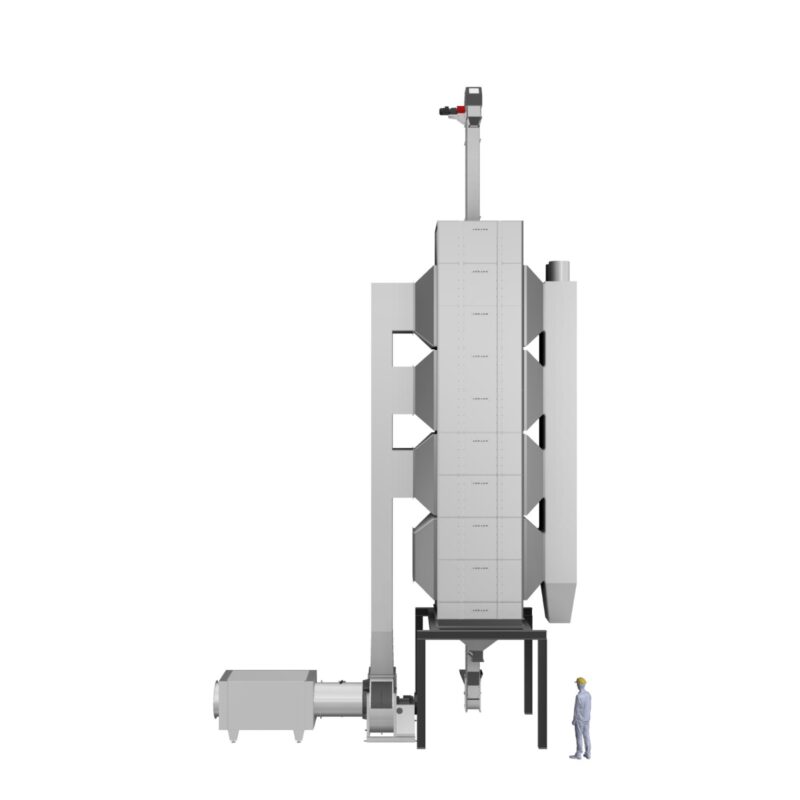
Front engineering view of the tower assembly and air-handling arrangement.
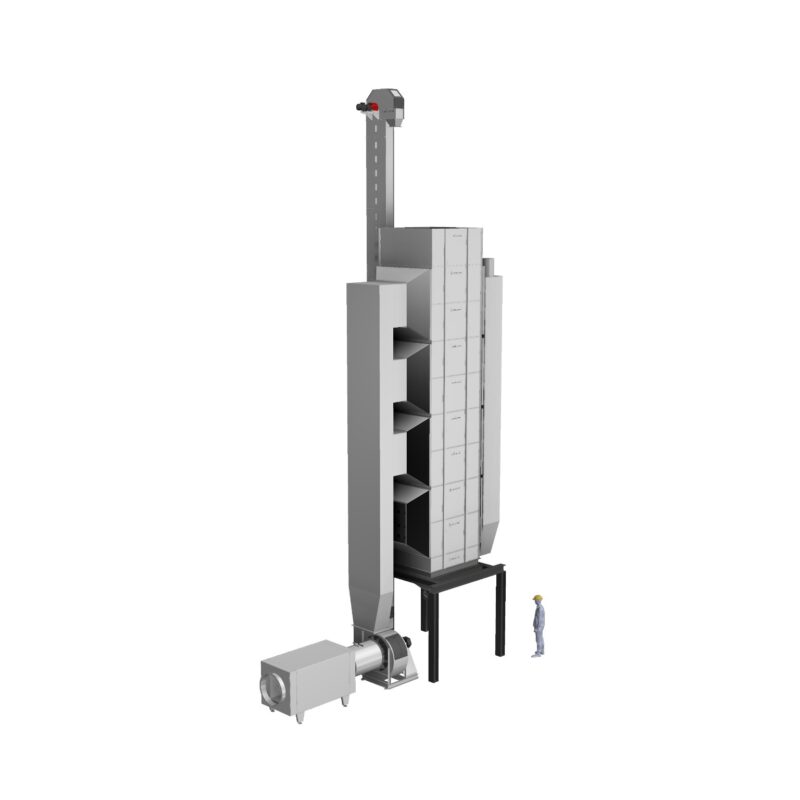
Perspective engineering view of the tower assembly and feed elevator.
Information Needed for a Drying Proposal
- Crop, variety, intended use and representative material samples.
- Inlet and target moisture, including the measurement basis.
- Required throughput and daily operating hours.
- Acceptable product-temperature and quality limits.
- Available heating source, electricity and site conditions.
- Feeding, discharge, cooling and storage arrangements.
- Cleaning, inspection and changeover requirements.
Checking the Finished Product
Measure outlet moisture using an appropriate method and representative sampling. Check variation through the lot, product temperature and the agreed quality characteristics. Where planting seed is processed, germination checks remain separate from moisture measurement.
Drying can support storage management, but moisture reduction alone does not guarantee shelf life or eliminate every storage risk. Cooling, handling and the storage environment also need to match the product requirements.
Integration with a Processing Line
Cleaning may be needed before drying to remove selected impurities, while conveying equipment and storage silos must suit the finished material. Review air-screen cleaning and the planning requirements for a turnkey seed processing plant.
Frequently Asked Questions
Is one drying temperature suitable for every crop?
No. Conditions need to suit the crop and its intended use, with product quality checked against the agreed requirements.
Can dryer capacity be compared using tonnes per hour alone?
No. Compare the crop, inlet and outlet moisture, ambient conditions and quality limits as well as throughput.
How do I request a drying proposal?
Contact ADDAMS about grain or seed drying with your material, moisture target, capacity and utility information.

