

Seed and Grain Storage Silos: Planning Capacity and Discharge
Storage silos hold seeds, grains and pulses between processing stages or before dispatch. A suitable arrangement depends on the material, storage period, required capacity and discharge behaviour. Planting seed, food crops and treated seed can need different handling and segregation arrangements.
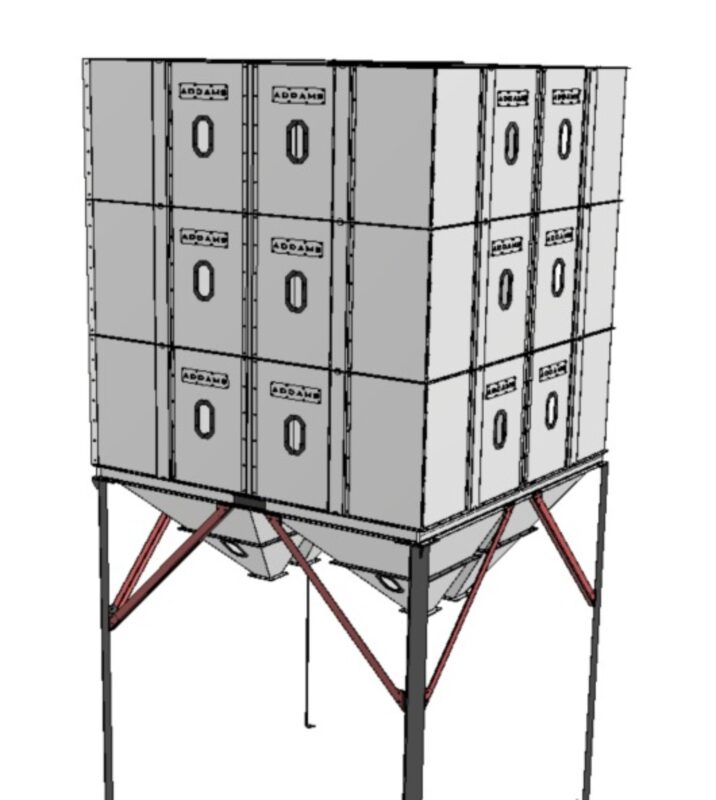
ADDAMS modular storage-bin engineering render showing panel construction, inspection windows and hopper outlets. Final arrangement is selected for the application.
Related ADDAMS Storage Equipment
Explore ADDAMS square silos for a modular storage arrangement and conveyor-bottom silos for a different discharge approach. Confirm the selected equipment against the material and the required flow rather than assuming every silo has the same features.
Define the Storage Duty
State the crop, intended use, incoming condition and expected holding period. Separate buffer storage within a processing line from longer-term storage. Include the number of lots, changeover frequency and any need to keep varieties, grades or treated materials apart.
Storage capacity in tonnes depends on bulk density as well as usable volume. Allow for the agreed filling limit and operating reserve. A capacity quoted for one crop should not be applied to another without checking the basis.
Check Moisture and Temperature Before Filling
Storage does not replace moisture management. Define the acceptable incoming condition and review the grain and seed drying stage where moisture reduction is required. Include cooling when product temperature needs to be reduced before holding.
Aeration, temperature monitoring and level sensing must be specified for the selected installation. Their presence, control range and suitability should be confirmed in the proposal. A silo alone does not guarantee seed germination, shelf life or protection against every storage risk.
Plan Filling, Flow and Discharge
Review how the material enters the bin and how it reaches the next process. Hopper geometry, outlet size and the discharge device need to suit the material. Bridging, segregation, residual material and product damage should be considered during selection.
Coordinate the silo with conveying equipment and the weighing and bagging stage. Confirm transfer heights, access space and the intended operating sequence for the complete line.
Cleaning, Inspection and Lot Separation
Define how residual material is removed between lots and which surfaces require inspection. Access arrangements and cleaning methods should match the stored product and the site requirements. Any pest-management, food-contact or other compliance requirement needs its own specification and evidence.
Information for a Storage Proposal
- Crop, intended use and representative material information.
- Bulk density, incoming moisture and temperature.
- Usable storage capacity, holding period and number of separate lots.
- Required filling and discharge rates.
- Available height, footprint and structural constraints.
- Upstream and downstream conveying or weighing equipment.
- Cleaning, monitoring, aeration and access requirements.
Request a Storage Layout Assessment
Discuss your seed or grain storage requirements with ADDAMS. Provide the material, required capacity, site layout and discharge duty so the proposed arrangement can be assessed.

