

Grain and Seed Dust Collection: Planning the Extraction System
Dust collection captures airborne material at selected points in a processing line and separates it from the extraction air. Equipment selection depends on the material, dust characteristics, required airflow and the arrangement of the plant. ADDAMS helps assess the collection points and equipment around the proposed duty.
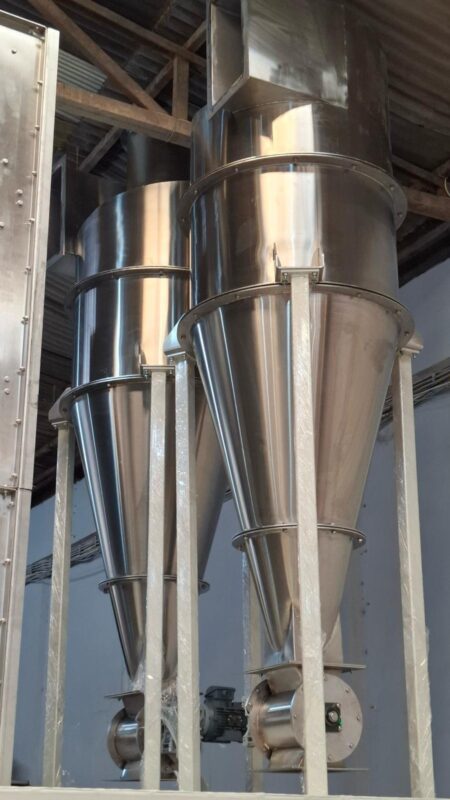
ADDAMS cyclone separators with rotary discharge valves, photographed in the workshop.
Related ADDAMS Dust Collection Equipment
- Cyclone separators for a suitable particle-separation duty.
- Air bag filters for an appropriate filtration arrangement.
- Reverse pulse jet air filters where the selected design uses pulse cleaning.
Compare the options against the actual dust and air circuit. A cyclone, filter and extraction fan perform different roles; a product listing alone does not establish collection efficiency, emission limits or suitability for a particular dust.
Centrifugal Fans for Extraction Systems
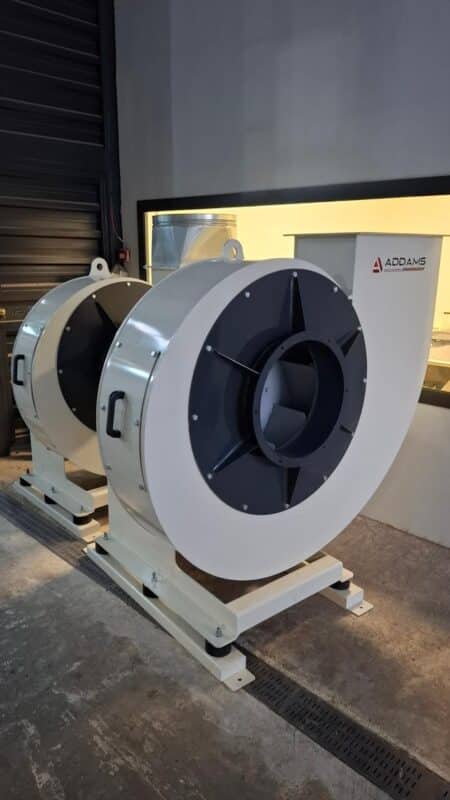
ADDAMS centrifugal fans photographed in the workshop. Fan selection must match the required airflow, system resistance and material conditions. Review air separation alongside dust collection when planning the air circuit.
Identify the Collection Points
Map the equipment and transfer points that release dust, including cleaning, transfer, milling and filling stages where relevant. Review air-screen cleaning, conveying and weighing and bagging as parts of the complete layout.
State which points operate together and how the collected fraction will be discharged. Duct routes, access space and the location of the collector affect the installation and should be included in the proposal.
Specify the Material and Operating Conditions
Provide the crop or processed material, the dust characteristics known for the application and the expected operating conditions. Confirm filter media, cleaning arrangements, contact materials and discharge equipment for the selected configuration.
Any health, emissions or combustible-dust requirements need a separate assessment and documented design basis. General dust extraction should not be presented as a guarantee of regulatory compliance or explosion protection.
Inspection, Cleaning and Maintenance
Plan access to inspection points, filters, fans and discharge devices. Agree how collected material is removed and how operation will be checked. Maintenance intervals and operating limits should follow the instructions for the selected equipment and application.
Information for a Dust Collection Proposal
- Material and available dust-characterisation information.
- Processing equipment and proposed extraction points.
- Required airflow and available system information.
- Operating hours and simultaneous equipment use.
- Site layout, duct routes and utilities.
- Collected-material handling and cleaning requirements.
- Applicable site and performance requirements.
Discuss your dust collection layout with ADDAMS and provide the process details needed to assess the proposed system.

